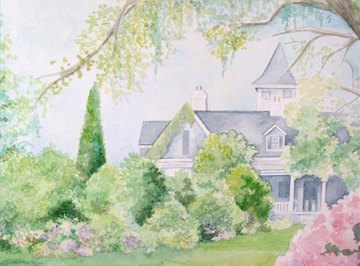

Artists use transparent painting techniques such as glazing and color washes to achieve color depth (multiple layers of translucent or transparent color that give the illusion of three dimensions) and luminescence (areas of light showing through the paint). Both techniques are highly effective in achieving "heightened" or "beyond real" realism in painting. Transparent painting techniques are also employed in other art styles to add interesting light and overlay effects.
Transparent, Translucent and Opaque Media
Artists' paints are transparent, translucent or opaque by nature. For example, cadmium colors, cerulean blue and chromium oxide green are opaque, while rose madder is transparent and ultramarine blue is translucent. Colors become opaque when white is added to them.
Acrylic "Watercolor" Wash Technique
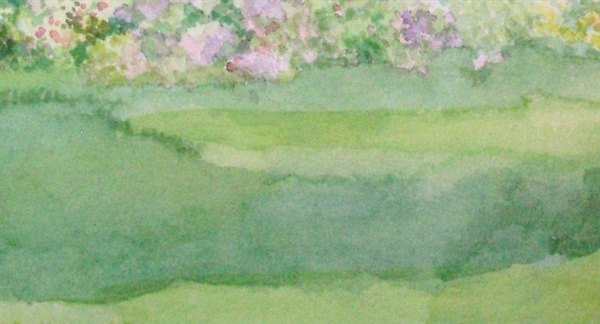
Acrylic paints are water-based and very versatile. They can be diluted with water and applied to a gessoed canvas much like watercolors can be applied to cold-press (rough surface) watercolor board. Transparent washes of acrylic paint are particularly useful for painting large, uniform color areas or for dark-to-light or light-to-dark sections. Acrylic paint is thinned, or diluted, with water, then applied in straight, concurrent strokes with a broad, flat tipped brush. When uniform color is desired, the artist mixes enough pigment to sufficiently cover the area. He reloads his brush with each horizontal brushstroke to assure an even distribution of color. When graduated color (light-to-dark or vice versa) is desired, the artist dilutes the acrylic paint to the darker shade of the gradation. He paints the first stroke in the mixed color, dipping his brush into plain water between strokes to lighten the pigment of each subsequent stroke. Practice perfects the skill of transparent acrylic wash painting on canvas. This technique is frequently used for skies, water, backgrounds and other areas requiring "flat" (uniform) or graduated color. Washes can be carefully applied over one another with sufficient drying time between colors. However, "muddy" or dirty areas can occur if cool and warm or complementary colors (opposites on the color wheel) are applied to the same areas.
Glazing Technique in Acrylic or Oil Painting
Acrylic paints can be mixed with gel medium instead of water to behave more like oil paints. Oil paints are thinned with linseed oil or safflower oil and turpentine, using about the same amount of each. Glazing medium for oil paints can also be purchased. Glazing requires overlapping application of thin paint layers. This is a time-consuming process, as each layer must be thoroughly dried before applying another layer, and thin paint takes a long time to dry. The artist uses a soft brush that will help to conceal any brush marks as she applies the paint. It is best to use colors that are transparent and to use them alone rather than mixing them. Hint: It's easy to tell whether a paint color is transparent by stroking it over another color. Glazing adds gorgeous luminosity to paintings.
References
About the Author
Rae Casto began writing professionally in 1982. She writes on a variety of topics including health, nutrition, art and culture for various websites. Casto holds a Bachelor of Arts in psychology and art from Guilford College and a Master of Public Administration in health administration from the University of North Carolina at Pembroke.