How to Care for a Hairless Rat

How to Care for a Hairless Rat thumbnail
How to Care for a Hairless Rat

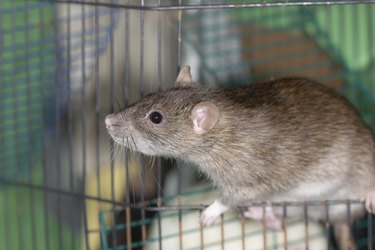
Hairless rats have a strange appearance and special needs that are slightly different from the averaged furred pet rat. Hairless rats are bred from Rex rats, one of many rat breeds. Rex rats, which have a coat that's curlier and coarser than an average fancy rat, have one copy of the Rex gene. When a rat gets two copies of the Rex gene, he is born hairless. Hairless rats are sometimes referred to as "Double Rex" rats, a reference to the two copies of the Rex gene. Unlike many other "hairless" animals, hairless rats are almost completely bald. Most will have some fine, sparse fur near the nose, around the ankles, and on the tail, but otherwise, they're all skin. This hairless attribute means that hairless rats have specialized care requirements, different from furred rats.

Things You'll Need

  • Rat cage
  • Cloth cage bedding
  • CareFresh ultra bedding
  • Quality rat food
  • Olive oil
  • Bread
  • Unscented baby lotion
  • Anti-bacterial soap
  • Newspaper
  • Zip ties
  • Fabric (old clothing or rags will suffice)
Show More

Instructions

  1. Preparing for a Hairless Rat

    • 1

      Get an appropriate rat cage. Hairless rats, like all other rats, require a large cage with bar spacing that's 1/2 inch or smaller. Rats should never be kept inside a fish tank, as this does not allow for good ventilation. Good ventilation is vital to ensure the health of a pet rat due to their highly sensitive respiratory systems. The floor of the cage must not be exposed wire. Some of the larger cages appropriate for rats are only available with wire floors, but this leaves the rat prone to foot and leg injuries. To remedy the problem, place a section of newspaper, changed daily, over the floor. To cover wire ramps, cut an appropriately sized piece of fabric and secure the fabric to the ramp by poking holes in the fabric and securing it to the floor with zip ties. Cut away the excess zip tie plastic. The fabric covering for ramps must be changed weekly, or sooner if needed.

    • 2

      Use soft cage bedding to accommodate a hairless rat's sensitive skin. Cage bedding must be soft and easy on the skin. There are two bedding options appropriate for hairless rats: Fabric cage bedding or CareFresh Ultra bedding. CareFresh Bedding is usually recommended for rats, whose sensitive respiratory systems are damaged by the oils in pine or cedar wood shavings. But hairless rats cannot tolerate the regular CareFresh bedding, which is too rough for their baby soft skin. CareFresh Ultra (white in color) is softer and is therefore acceptable for use in a hairless rat's cage. The soiled bedding must be removed daily and a complete bedding change is required once a week. The other option available to hairless rat owners is using fabric bedding. Old T-shirts, old jersey sheets, fleece and other soft cotton fabrics can be placed inside the cage, atop a section of newspaper. The hairless rats will nest and burrow in the soft and warm fabric. The fabric, like the CareFresh, must be switched out daily and then laundered.

    • 3

      Place the hairless rat's cage in a warm, draft-free location. A hairless rat is prone to becoming chilled, so avoid placing the rat's cage near an open window or other drafty spot.

    • 4

      Clean the rat's cage daily. Hairless rats cannot tolerate a dirty cage and their sensitive skin will develop rashes, sores and infections if exposed to urine or feces. Daily cage cleanings are required and absolutely vital to a hairless rat's health. If you are not willing and committed to cleaning out a hairless rat's cage on a daily basis, it is best to opt for a different pet.

    • 5

      House your hairless rats with furred rats, when possible. A hairless rat with a furred cagemate is more likely to stay warm when the room gets chilled. Rats tend to sleep and cuddle together when they're cold, sharing body heat. This works to a hairless rat's benefit.

    Caring for Hairless Rats

    • 6

      Feed your hairless rat a diet that's higher in fat and calories. The hairless rat's body uses more calories than a furred rat, and it takes more energy for the hairless rat to maintain his body temperature, so it's vital to feed a diet that accommodates that. Some great foods for hairless rats include avocado, cottage cheese, meat, nuts, yogurt and cream cheese spread thinly over whole grain crackers.

    • 7

      Monitor your hairless rat's skin for dryness. If dry skin is a problem for your hairless rat, provide chunks of bread soaked with olive oil. This will help to keep the rat's skin moist and supple. If this does not fully remedy the problem, massage unscented baby lotion (sensitive skin formula, if available) or pure olive oil into the rat's skin once a day.

    • 8

      Monitor your hairless rat for skin lesions. Sebaceous cysts are the most common skin lesions seen in hairless rats and these can often become infected. Some of these cysts can become quite large and will require lancing, twice-daily cleaning and a course of antibiotics to promote healing. For rats who are prone to sebaceous cysts, try bathing the rat once or twice weekly with a gentle anti-bacterial soap to remove dirt and dead skin cells that clog the rat's skin pores. Following the bath, massage a non-comedogenic and unscented baby lotion (pick a sensitive skin variety, if available) to prevent dryness.
      If this fails to improve the situation, speak with your veterinarian about trying your hairless rat on a course of antibiotics and a prescription shampoo.

Tips & Warnings

  • If you use CareFresh Ultra bedding for your hairless rat, a T-shirt piece or a small fleece receiving blanket should still be provided to give the hairless rat a warm place to sleep if he becomes chilled.

  • Never keep a hairless rat in wood shavings. The wood will cause rashes, scratches and and pain to the rat's sensitive skin.

Related Searches:

Resources

  • Photo Credit curious rat image by Olga Barbakadze from Fotolia.com

Comments

View all 22 Comments

You May Also Like

  • How to Fix a Hairless Rat's Dry Skin

    Hariless rats require special care and accommodations due to their almost completely furless skin. Most hairless rats are completely bald except for...

  • How to Take Care of a Young Hairless Rat

    Hairless rats make unusual pets and can be playful companions. Hairless rats require care similar to that provided to "normal" rats, but...

  • Pet Rat With Skin Problems

    Highly intelligent, social and affectionate animals, rats are considered wonderful pets. Although they are relatively easy to care for, they are susceptible...

  • How to Care for Infant Hairless Rats

    Infant hairless rats can do little more than roll around and squeak during their first week of life. If their mother neglects...

  • How to Care for Baby Rats

    Since rats are not pets that like to live alone, it is likely that your pet rats will eventually have babies. The...

  • How to Care for Pet Rats

    Before you get any new pet is important to research the animal first, to check it is a suitable animal for you,...

  • How to Care for Rats

    A domesticated rat can make the perfect pet. Rats have gotten a bad rap, but they are actually very affectionate, clean and...

  • How to Take Care of a Hairless Cat

    If you've had cats before, adopting a hairless cat might be like getting to know a whole different species. Hairless cats, also...

  • The Hairless Rat's Diet

    Despite the bad rap rats often get, they can make excellent pets under the right circumstances. These animals provide the personality and...

  • How to Keep Hairless Rats Warm

    Hairless rats are more sensitive than rats with fur, and it's easy for them to feel cold as winter approaches and temperatures...

  • A Bald Eagle's Diet

    As the Smithsonian National Zoo explains, bald eagles are predators. They are equipped with excellent eyesight and powerful beaks and talons to...

  • How to Help a Hairless Rat With Skin Infections & Cysts

    Hairless rats make social and friendly pets, with a very unique appearance. But unfortunately, the trait that makes hairless rats so appealing...

  • Pet Rat Skin Disease

    Pet rats are susceptible to various forms of skin diseases, mostly because of their excessive scratching. The scratching is usually caused by...

  • Information on the Hairless Cat Breed

    "Hairless" is not a particular breed of cat, but a category of cat breeds that have the hairless characteristic. Hairlessness is a...

  • Different Breeds of Domestic Rats

    Although some people keep domesticated black and Gambian pouched rats as pets, brown rats are the most popular pet rats, and are...

  • Healthy Rat Diet

    Rats are omnivores that can and will eat almost anything, a quality that has helped them survive in urban habitats around the...

  • How to Care for Rats

    For better rat care advice see The Rat Report. Not all wood bedding has harmful oils. Pine and Cedar are bad and...

  • Differences Between Feeder Rats and Pet Rats

    It might be disconcerting to realize that pet rats and the rats bred as reptile food are the same domestic variety of...

  • How to Keep a Pet Rat

    Rats can make intelligent, affectionate pets. They are active and social so they require a devoted owner who will give them plenty...

Related Ads

Featured