Things You'll Need
Router kit
2 hand clamps
Poplar board, 4-by-72-by-3/4-inches
Corner rounding bit, 1/4-inch radius
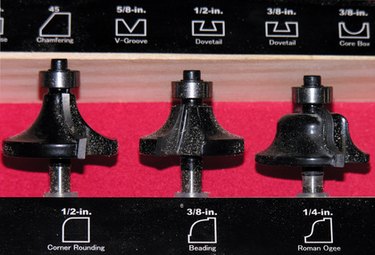
Learning to use a wood router is rewarding. Routers allow the beginner to add style to wood projects like professionals. The router is a fundamental tool of every woodshop because of its flexibility in bit configuration. Routers can create moldings, dadoes, profiles and splines. Whatever the application, wood routers must be treated with respect by first learning to use a corner rounding bit to get the feel of a router in your hands.
Step 1
Clamp the poplar board to the edge of a work table so that the edge of the board is extending out over the edge of the table. The router spins clockwise, so the board edge should be on your right side. The router will be used to cut wood against the rotation of the bit.
Video of the Day
Step 2
Open the case and remove the router and two wrenches that come with the router kit. The small wrench fits the shaft of the router where it emerges from the router motor. The bigger wrench fits the large nut on the end of the router. Fit both of the wrenches on their respective places. Holding the small wrench steady, turn the large wrench counterclockwise to loosen the nut.
Step 3
Slide the bit into the router collet until it bottoms out. The router collet is the hole in the end of the nut you just loosened. Hold the small wrench and tighten the large nut, using the small wrench to apply torque as you tighten the large nut.
Step 4
Grab the router with both hands, using the appropriate handles on both sides of the router. Set the router on the poplar board and slide the bit up against the wood. Look underneath the router base at the point where the bit will contact the wood.
Step 5
Loosen the knob on the side of the router that locks the depth of the router bit. On the right side of the router there is a depth gauge. Turn the knob clockwise to raise the bit, counterclockwise to lower the bit until the cutting edge of the bit is centered on the edge of the board. Tighten the depth-locking knob.
Step 6
Hold the router firmly with both hands. Move the bit away from the wood but keep the router base resting on the board. There will be a switch within reaching distance of your thumb. Keeping both hands on the router, turn on the switch and be ready for the recoil of the router when it twists as the motor starts.
Step 7
Ease the bit into the wood until the bearing on the bottom of the bit contacts the wood. Begin pulling the router toward your body as you slowly step backward, pulling the router along the edge of the wood, letting the bearing glide along the side of the wood. When you get to the end of the board, let the router slide off the board.
Step 8
Reach up with your thumb and turn the router off. Let the bit slow down and stop spinning before setting the router down.
Tip
Read the instruction manual before attempting to operate the router.
Warning
Make sure the bit is not touching the wood when you turn on the router.
Always wear safety glasses when using a router.
Video of the Day