Tip
Always make direct eye contact when giving commands to your Chihuahua. Your leadership will inspire confidence in this spirited little dog.
Their characteristic shivering is often done to generate body heat. Put a doggie sweater on your Chihuahua on cooler days to keep it warm, even while it's indoors.
Use love and praise to train your Chihuahua rather than food rewards. The rationale is simple: if you need the dog to respond to a command in an unfamiliar spot, you may not always have a treat in your pocket, but a kind touch and a reassuring tone are something that are constantly with you.
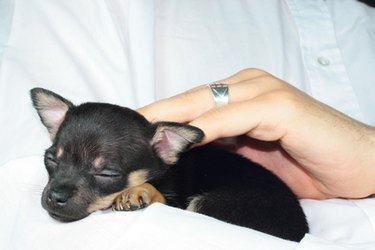
The basic obedience commands of sit, stay and come are vital to your Chihuahua's safety and are good building blocks for other commands and tricks you may want to add later on. Chihuahuas are intelligent dogs and catch on very quickly to new concepts. They are affectionate and loyal in nature and will want to please their owner. Training your Chihuahua should begin immediately as soon as it comes to your home to establish its place in the new pack.
Step 1
Concentrate on housebreaking first. Other training can wait a few days. Begin immediately upon bringing her home. Even in a fenced yard, leisurely walk your Chihuahua on a leash, allowing time for the dog to get familiar with the new property. Praise lavishly when it uses the bathroom. Your guidance will show that this is the special place "to go". Repeat this several times during the day, and at bedtime. Four or five days is all that's needed to establish a lifelong pattern.
Video of the Day
Step 2
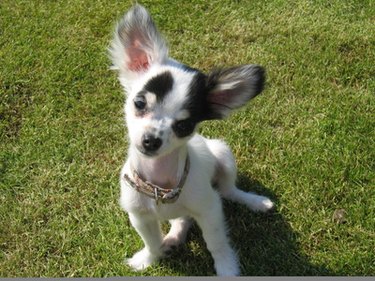
Be the leader. Dogs are pack animals and need a leader. This is simply the canine nature as ordained from the beginning. When you talk to your Chihuahua, it will perk up itsr ears. This simple interaction of you speaking and the dog wanting to listen is a natural demonstration of a dog reacting to leadership. Always be firm and consistent with your commands. Don't leave out the components of love and praise. Even the most temperamental of dogs will respond to a good leader.
Step 3
Teach sitting by placing your fingertips on your Chihuahua's rump and pushing down lightly while firmly saying "Sit." Leave your fingers in place as it continues sitting and praise the dog. Repeat the command as you remove your hand, allowing it to sit unaided. If the dog gets up, duplicate the previous steps. After a moment or two allow, the dog to get up and lavish with praise for cooperation.
Step 4
Instruct the dog on the concept of "Stay", showing your Chihuahua the palm of your outstretched hand while saying "Stay." If the dog moves, return it to its original position and repeat the command until it stays in place unaided. As always, give affection to reward your dog's cooperation.
Step 5
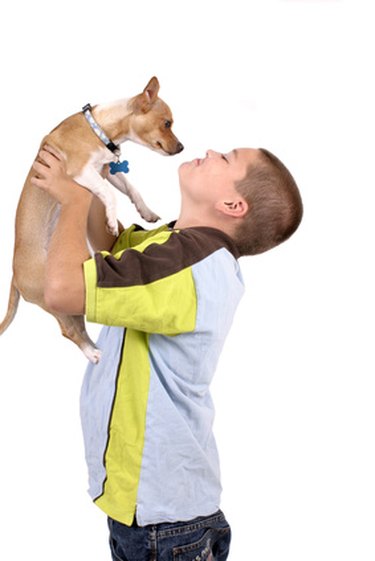
Invite your dog to "Come." Dogs naturally interpret a clap of the hands and outstretched arms as an inviting gesture. Do this motion while enthusiastically calling out "Come Here." After a few times, your Chihuahua will associate the word with the act of going to you. Next, practice saying the word "Come" in a natural speaking tone instead of an excited one and repeat it this way until your Chihuahua will respond to your customary voice level.
Video of the Day