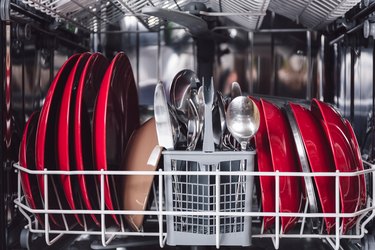
How to load and run a dishwasher seems like an easy task, but do you know the proper way to load and run your dishwasher?
Step 1
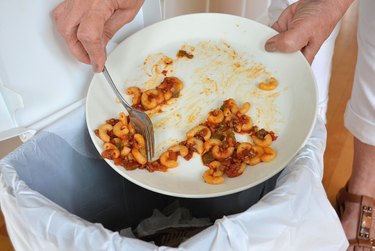
Scrape off big chunks of food before you put dishes in the dishwasher, but don't worry about rinsing them off. Most washers are designed to handle food particles. (Don't expect the dishwasher to remove burnt-on foods, though.)
Video of the Day
Step 2
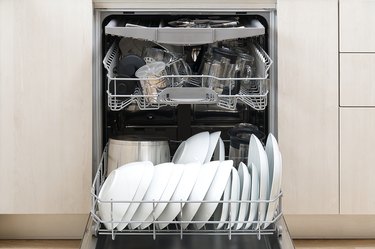
Position cookie sheets and large platters along the sides so they don't prevent the water from reaching the other dishes.
Step 3
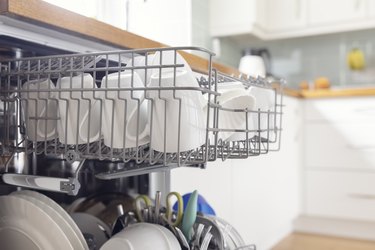
Reserve the top rack for plastic items, glasses and mugs. (Make sure that plastic items are dishwasher-safe.) Set plates and bowls in the bottom rack.
Step 4
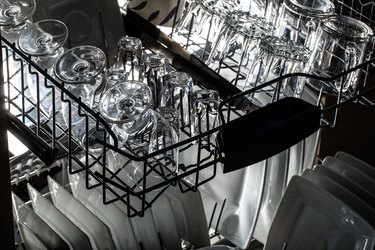
Be sure that glassware is put on the prongs. Loose glasses might break and make a dangerous mess.
Step 5

Put pots and dishes with baked-on food in the bottom rack facing down toward the sprayer arm.
Step 6
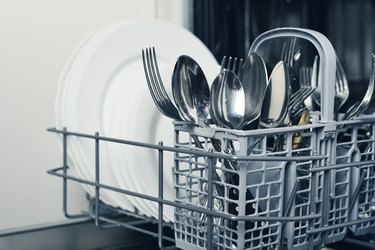
Set silverware handles down, except for knives, which should be handles up in the silverware basket.
Step 7
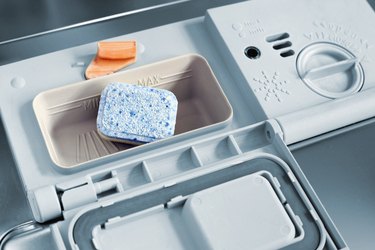
Fill both dishwasher cups with dishwasher detergent or dishwasher tabs.
Step 8
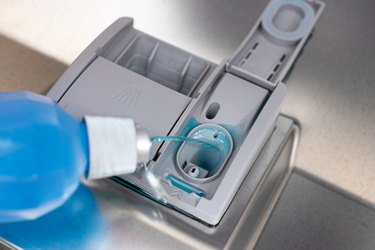
Add rinse agent to rinse agent dispenser; replace top of dispenser.
Step 9
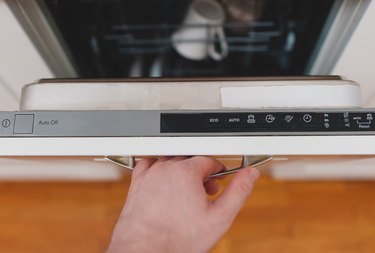
Close door securely.
Step 10
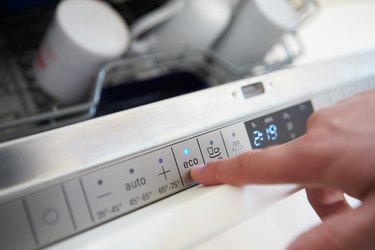
Choose a wash cycle appropriate to the load.
Step 11
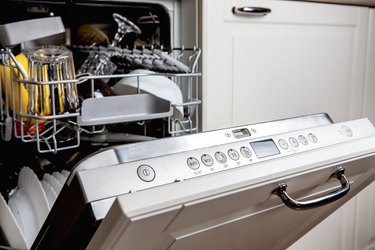
Choose a dry cycle. Air drying saves energy, but may cause spotting.
Step 12

Start dishwasher.
Video of the Day