How to Fish From Canoes

How to Fish From Canoes thumbnail
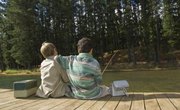
Canoes make nimble and versatile fishing vessels.

Fishing from a canoe has numerous advantages. Canoes are equally at home on the quiet waters of lakes and ponds as on the faster waters of rivers for which they were designed. Lightweight and maneuverable, canoes are aptly suited for bait, spin- or fly-fishing and are able to glide across water less than 6 inches deep. When paddled with care, a canoe can sneak fishermen into areas either too difficult to reach from the shoreline or inaccessible to bigger boats.

Things You'll Need

  • Swimsuit
  • 10 to 15. lb. anchor
  • Anchor rope
  • Gloves
  • Trolling motor
Show More

Instructions

    • 1

      Learn to stand in a canoe. Through it's not as stable as a flat-bottomed boat, balancing while standing in a canoe is not as hard as it seems. Being able to stand in a canoe is not critical to using a canoe for fishing, but it makes an immeasurable difference in your ability to catch fish. Standing allows for a better read on the water while providing for much longer -- and accurate -- casts.

    • 2

      Wear a swimsuit, and take the canoe into the shallow area of a quiet lake or pond on a warm day. Stand up in the center of the canoe with your feet spread across the width of the boat. Slowly begin to move your feet around the bottom of the canoe until you get a feel for balancing. Practice walking up and down the length of the canoe and stepping over the ribs while keeping your feet along the keel, like walking a tightrope. Practice until you can stand and move comfortably and confidently.

    • 3

      Load up to four people in a canoe, depending on the canoe's size and weight capacity. Have the person at the bow cast over the front, the person at the stern over the rear and the people in the middle over each side.

    • 4

      Allow the canoe to float downstream with the current, using one paddle as a rudder. Place the paddle over the side, near the back of the canoe, in the direction you wish to turn. Hold the blade of the paddle against and parallel to the canoe. Twist the handle on the paddle so the back of the blade rotates away from the canoe. The more the paddle is rotated, the sharper the canoe will turn. Do not turn the canoe more than 45 degrees against the current, or you risk capsizing.

    • 5

      Steer the canoe near likely looking holding spots for fish in rivers, such as quiet pools along the banks and slow-moving riffles. Cast the lure downstream from the canoe, and work the lure through the holes as the canoe drifts by.

    • 6

      Anchor the boat near a prime fishing spot in the current. Tie a 10 to 15 lb. anchor to a rope, then tie the anchor rope to the cleat on the outside of the canoe below the gunwale on the stern. Wear a pair of gloves, and toss the anchor upstream behind it. Allow the rope to feed through your hands slowly until all the slack is taken out before releasing the rope. This prevents the anchor from jerking the canoe and potentially upsetting the boat. The anchor also keeps the canoe pointed into the current while you fish. Do not attempt to anchor a canoe in fast-moving water, or you risk having water come in over the stern and swamp the boat.

    • 7

      Paddle the canoe out of the way of coves and channels on lakes and bays that are too narrow or shallow for other types of boats.

    • 8

      Turn the canoe so the point of the stern is facing toward the spot where you wish to cast when fishing solo in lakes and ponds. This shortens the casting distance. Turn the canoe parallel to the fishing spot with more than one person in the boat.

    • 9

      Mount a trolling motor on the side of a canoe near the stern. Set a deep cycle battery under the rear seat of the canoe, and attach the positive and negative clips of the motor to the positive and negative battery terminals. Because of their light weight and efficiency at moving though the water, you will be able to fish all day long in a canoe on a fully charged deep cycle battery. Always keep at least one paddle handy for backup.

Tips & Warnings

  • When using a canoe in moving water, always enter the canoe over the stern and exit over the bow.

  • Place carpeting in the bottom of a canoe, which deadens sounds and prevents spooking fish.

  • Always wear a life jacket when in a canoe.

  • Only walk in a canoe as an exercise to learn balance. Never walk upright in a canoe in deep or fast-moving water. Only stand when fishing alone.

  • Never attempt to lean over the edge of a canoe when standing upright, or you will go for an accidental swim.

  • Do not tie an anchor to the ribs on the canoe in moving water. The current will pull the canoe sideways and swap or capsize it.

Related Searches:

References

Resources

  • Photo Credit Stockbyte/Stockbyte/Getty Images

Comments

You May Also Like

  • Canoe Camping & Fishing in South Carolina

    South Carolina has plenty of recreational opportunities for water activities including canoeing and fishing. The state is home to a variety of...

  • How to Rig Canoes for Fishing

    Fishing from a canoe can be rewarding. Canoes are simple, lightweight and relatively inexpensive. The emerging popularity of small-boat angling has led...

  • How to Outfit a Canoe for Fishing

    Transform your canoe into a fishing vessel by making a few modifications. Canoe fishing has many advantages, such as providing the ability...

  • How to Trout Fish in River Hawk Canoes

    River Hawk uses a wide base to build stable canoes. The boats are ideal for fishing because they are compatible with a...

  • Canoe Fishing Tips

    Canoe Fishing Tips. Canoe fishing is a sport wherein a canoe takes the place of the standard boat. Canoe fishing is best...

  • How to Outfit a Canoe for Fly Fishing

    Some of the best fly fishing is available in areas not accessible by traditional boats. A good way to fish these areas...

Related Ads

Featured