
The crepe myrtle (Lagerstroemia indica) is a deciduous shrub that gets its name from its showy flowers, which resemble crepe paper. It grows to a height of about 15 to 30 feet, with a wide-spreading, multi-stemmed form, and thrives in U.S. Department of Agriculture plant hardiness zones 7 through 9. If you want to transplant a crepe myrtle to a different spot, taking a bit of extra care before the move and choosing the time and method carefully can help ensure it thrives in its new location.
Transplant in Spring or Fall
Video of the Day
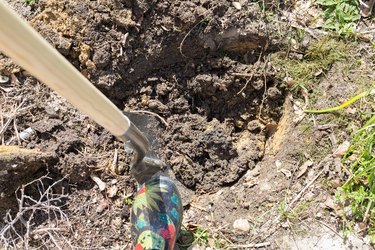
Because it's a deciduous plant, the crepe myrtle becomes dormant each fall when it drops it leaves in preparation for cold weather. Fall is a good time to transplant a specimen, because the soil is still slightly warm and, even though top growth has stopped, roots can take up moisture before winter cold arrives. Transplanting the shrub in spring is another good option, provided you do this early, before the plant has started growing and new leaves appear, so roots can get partially established before top growth begins. You should wait until the ground is at least 40 degrees Fahrenheit for good results. It's best to avoid transplanting in summer, because warm weather puts extra stress on the plant while it's trying to recover from transplanting.
Video of the Day
Prepare in Advance
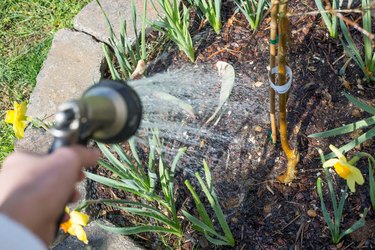
If you know in advance that you're going to transplant a crepe myrtle, keep it especially well-watered for the preceding season, aiming for 1 inch of water weekly, including rain. If it's a large, established plant, prune its roots about 6 months before the move, to stimulate new root growth, but wait until the plant's leafless if you root prune in fall or hasn't started growing if you root prune in spring. To prune roots, dig a circular trench around the plant that's slightly larger than the desired size of the root ball. For example, if the plant's 5 feet tall, the ball should be 18 inches in diameter and the trench 14 inches deep. For taller plants, add about 2 inches to root ball and about an inch of depth to the trench for each additional foot of height. When pruning roots, clean your tool between cuts with rubbing alcohol to prevent spread of disease. Back-fill the trench with topsoil and water it well, then keep it evenly moist until you're ready to transplant.
Dig and Move the Plant
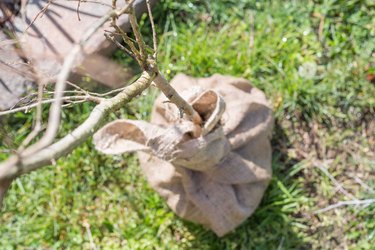
When you're ready to transplant the crepe myrtle, tie up the branches with twine to protect them from damage, then water the plant well and dig just outside the root-pruning trench, cutting any roots you encounter with a sharp spade. When outer roots are free, tip the plant to the side and dig under it to free it from the ground, then slide a large piece of natural burlap under the roots, moving it up around the sides of the root ball by tipping the plant gently back and forth. Tie the ends of the burlap together around the shrub's base and, if it's a large plant, use twine to secure the burlap around the root ball. Move the shrub to its new location as soon as possible, keeping the root ball moist at all times.
Planting and After-Care
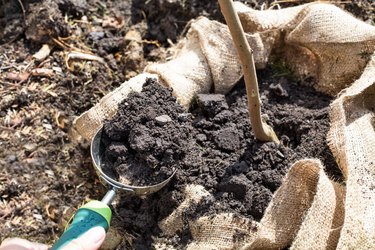
Transplant the crepe myrtle into a hole that's at least 50 percent wider than the root ball and set it about 1 or 2 inches higher than the ground level to allow for settling, leaving the burlap on the root ball but folding it away from its top and sides. Back-fill the hole halfway with topsoil, water the roots well, then finish back-filling and tamp the soil down well. Flood the disturbed area with water to ensure no air is trapped around the roots. Once the water has settled in fully, mulch the crepe myrtle with straw or shredded bark to retain soil moisture, but keep the mulch back a few inches from the base of the plant to discourage fungal problems. For the next season or two, water the transplant whenever the soil under the plant feels dry to the touch, and water until the top 6 inches of soil are moist. It's best not to fertilize the shrub for at least 1 year, to prevent burning delicate new roots.