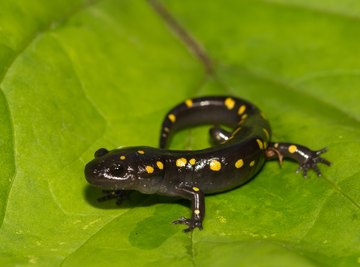

If salamanders have set up home in your yard or garden, they can give you a helping hand by eating the bugs that ruin your plants. Salamanders are not aggressive and will stay away from you if you stay away from them, but if you’re turned off by these lizardlike amphibians, you have a few options to get rid of them.
TL;DR (Too Long; Didn't Read)
Humane ways to get rid of salamanders include keeping your yard or garden free of debris, sealing your property, and trapping and relocating them.
Eliminate Bugs and Their Eggs
If there are no bugs around your property, salamanders look elsewhere for food. Pools of stagnant water attract bugs, so make sure the water around your property drains down and away from foundations. Clear dead leaves and other vegetation away from your gutters and drain pipes. Keep the grass well trimmed and not damp. Get rid of bugs with natural, organic insecticides sprays, repellents or granules. Make your home inhospitable to bugs by cleaning dishes, keeping food covered and wiping up spills immediately. Salamanders are meat eaters and are not attracted to areas without bugs.
Seal All Cracks and Holes
If you see a salamander in your home, inspect your property to identify any place a salamander could gain access. They can squeeze through small gaps to get into your house. Seal all cracks and holes in your basement and along the bottom of walls as well as gaps in fences to prevent salamanders invading your home or garden.
Catch the Creatures
If you find a salamander and aren't squeamish about touching it, grab it with your hands. If that doesn't appeal, trap it with a net or large glass jar. If the salamander is on the wall of your home, encourage it into a cardboard box with a broom and then quickly place a secure lid on the box. If possible, spray the salamander with cold water to slow down its movement. Take care not to hurt the salamander. Release it somewhere damp outside, like in a forest or a lush park.
Use Organic Repellents
Repellents may help keep salamanders away from your property. To avoid harming the salamanders, only use repellents that are natural and organic. Scatter granules wherever you have spotted the creatures, inside and out. Focus on damp areas, which salamanders favor for nest-building and egg-laying. Cover the granules with a spray repellent. Plug electronic repellents into the wall sockets of your home to release fumes to drive away salamanders. Scatter mothballs around the outside of your home. Salamanders dislike the odor and will move away from them.
References
Tips
- Salamanders are not aggressive but some are fasters than others.
Warnings
- A cat will get rid of salamanders for you too but it might get a little messy as the cat will probably eat them.
About the Author
Claire is a writer and editor with 18 years' experience. She writes about science and health for a range of digital publications, including Reader's Digest, HealthCentral, Vice and Zocdoc.