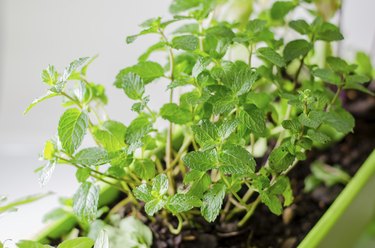
Keep fresh mint (Mentha spp.) at your fingertips all year when you grow mint indoors in pots on a windowsill, porch or in a sunny room. Mint, which grows as a perennial in U.S. Department of Agriculture plant hardiness zones 4 through 9, depending on the type, is available in a variety of fresh, flavorful types. Look for the tried and true standbys like peppermint (Mentha x piperita), hardy in USDA zones 5 through 9, or try one of the exotics like chocolate mint (Mentha x piperita f. citrata 'Chocolate') or lemon mint (Mentha x piperita f. citrata), both hardy in USDA zones 5 through 9.
Pots, Potting Soil and Drainage
Video of the Day
Grow mint indoors in an 6- to 12-inch-diameter pot with at least one hole in the bottom for drainage. Mint is particularly sensitive to wet feet, growing in a soggy environment where water can build up around the roots. Plastic and terra-cotta pots both work well and are readily available. Metal, wood and glazed clay pots can also work for your mint plants.
Video of the Day
Use potting soil mixed with compost and perlite to add nutrients and improve drainage. Mix 2 parts potting soil with 1 part each of perlite and compost. Clean garden sand and vermiculite both work in place of perlite. You can also use a commercial potting mix that's already blended with these ingredients.
Soil Moisture, Watering and Light
Keep the potting soil consistently moist when you grow mint indoors. Watering frequency depends on growing conditions. For example, unglazed clay and wood pots dry out faster than plastic or glazed clay pots, and potting soil dries out faster when it's hot and sunny. Feel the soil and water if it starts to feel dry 1/2 to 1 inch deep. If you use a tray to collect excess water, empty it after every watering.
Grow mint in a spot that gets bright direct light for at least six hours per day. Indoor plants will lean toward the sun. To keep them growing straight, turn pots once a week to expose both sides to the sun.
Fertilizing and Flushing Salt Buildup
Fertilize mint once a month with a liquid or water-soluble fertilizer, or at the frequency of label directions if they vary from this recommendation. Soak the soil until it's saturated through to the bottom. After potting up a new mint plant, wait three weeks before you begin fertilizing regularly.
Over time, salts from water and fertilizer can build up in the soil, potentially damaging mint plants. If this starts to happen, you'll notice white deposits on top of the potting soil or on the sides of clay pots. Flush salt out of the potting soil by moving the container outdoors or to a sink or tub. Flush water through the soil, allowing it to drain freely from the holes in the bottom. Repeat every few months.
Tips for Growing Mint Indoors
Although generally hardy, mint occasionally succumbs to diseases, particularly mint rust. Keep plants healthy by avoiding overfertilizing, which can stress plants, and watering the soil without getting leaves wet.
Mint rust is characterized first by rust-orange colored spots on stems and leaves. Get rid of those plants that show signs of mint rust. Once advanced, mint rust causes leaves to turn black and die. Sanitize containers by scrubbing them with household disinfectant and adding new potting soil before replanting fresh mint plants.
Air circulation is important indoors. Keep pots in an open screened-in porch or near open windows, if possible. Alternately, set up a fan on low near the plants or place pots where they'll catch the breeze from a ceiling fan. Avoid placing the indoor plants near heating and cooling vents, as the air can cause temperature fluctuations that affect growth.