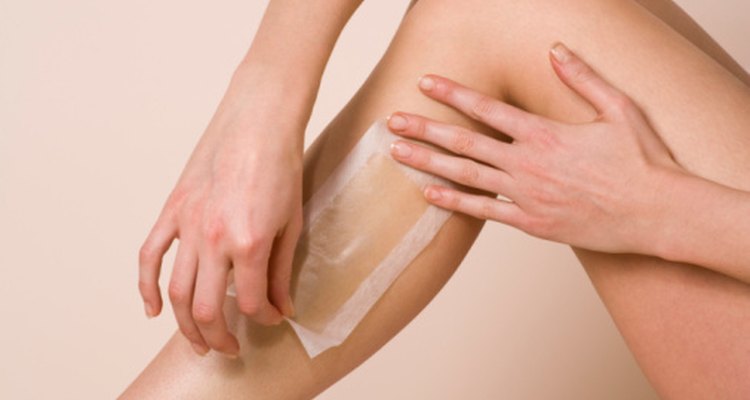
Waxing is a common method of hair removal for those who want something more permanent than shaving. The down side of waxing is that it normally causes a certain amount of redness or inflammation, particularly on sensitive skin. Waxing not only pulls the hair out of the follicle; it pulls at the skin too, which leads to the redness. This superficial damage should subside in a few hours. Help soothe your skin by trying some natural methods.
Apply an after-wax cooling product directly to red, inflamed skin immediately after waxing. Many commercial products contain Aloe Vera, which is renowned for its calming, healing properties. Apply a clear Aloe Vera gel, which contains more nutritional compounds than a green or blue gel. Make sure the gel does not contain any added dyes or fragrances, which could irritate your sensitive skin.
Brew tea bags and leave them to cool before placing them over your eyes, to relieve discomfort after waxing your brows.
Hold an ice pack or a bag of frozen vegetables against the irritated skin to relieve pain and help reduce inflammation. The ice will help close the pores that have been forced open during the waxing process. This reduces the risk of infection.
Sprinkle a generous amount of Epsom salts into tepid bath water and soak for several minutes. The Epsom salts will reduce inflammation; they are thought to reduce pain and speed up the healing process.
Grate a potato and apply the juices to your irritated skin. Wash your skin with cold water.
Add seven cups of oatmeal into a large bowl and grind them with a hand blender. Fill the bathtub with lukewarm water. Add the oatmeal and soak in the water for approximately 10 minutes. Pat your skin dry gently with a soft towel after getting out of the tub.
Related Articles
How to Get Rid of a Bruise Quickly

How to Soothe Waxed Skin

Benefits of Shea Butter and Coconut Oil ...
How to Cure Razor Burn on a Woman's ...
How to Prevent Breakouts After Waxing
How to Soften a Loofah

How to Blanch Red Potatoes for Peeling
How to Treat Eyebrow Wax Burns

Papaya & Acne

Aloe Ferox Benefits

How to Get Rid of Light Colored Bags ...

How to Make Goosebumps From Shaving Go ...
How to Get Rid of Purple Scars
How to Use Noxzema for Shaving

List of Retinoids
How to Heal an Inflamed Bikini Area
Remedies for Shaving Bumps on Inner ...

Chamomile Essential Oil Benefits
How to Make a Homemade Facial Hair ...
How to Get Rid of Razor Bumps Under My ...
References
Writer Bio
C. Giles is a writer with an MA (Hons) in English literature and a post-graduate diploma in law. Her work has been published in several publications, both online and offline, including "The Herald," "The Big Issue" and "Daily Record."
Photo Credits
Jupiterimages/Pixland/Getty Images