How to Safely Operate a Forklift

How to Safely Operate a Forklift thumbnail
diesel forklift

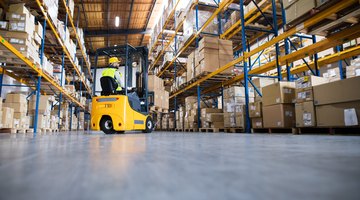
Forklifts are used in both small and large warehouse and yard operations. Many small operations like garden centers, nurseries, hardware stores and other businesses can benefit from owning a forklift. These machines can be a great asset to your business, but it is important to understand the safe operation of a forklift to safeguard your employees and your property.

Things You'll Need

  • a forklift
  • a hardhat if stacking items on top of each other or onto overhead racks.
  • Safety shoes when working around forklifts, pallets and large heavy items that can crush your toes.
  • a hard level work surface of asphalt or concrete.
  • a positive safety attitude.
  • pre-operation safety safety
Show More

Instructions

    • 1
      extended reach forklift

      There are several types of forklifts. For inside warehouses and stores, the preferred forklift is either a propane or electric model, these do not give off potentially deadly carbon dioxide. For well ventilated areas and outside yards, either a diesel or gasoline powered forklift is generally used.

    • 2

      Before operations, the operator should inspect the forklift for any obvious damage; flat tires, damaged or missing seat belt, missing or damaged control knobs, broken or damaged mirror, fluid leaks and any obstructions in the lifting mechanism. Also the operator should open the engine compartment and check any fluids for proper levels and check the fuel gauge for at least a quarter tank of fuel. If you find any defects they should be noted and a mechanic look at the forklift before operating.

    • 3

      Forklift Controls: All forklifts have an ignition switch, hand brake, foot brake, steering wheel, fuel or charging gauge, forward, reverse and neutral drive switch, a seat belt, accelerating pedal, and control knobs for raising, lowering and tilting the lifting forks. There may also be a control knob for shifty the lifting forks left or right.
      Additionally, there may be headlights, reverse lights, a mirror, backup alarm, and other safety devices. Many models require that the hand brake be engaged, the drive switch be in neutral, the seat belt be fastened and the seat be depressed for the forklift to start. Some models will stop the engine automatically if the seat belt is unfastened and/or the operator gets out of the seat. (These safety measures ensure that the vehicle does not drive unattended.)

    • 4

      Familiarization: Once you have read the manual and completed the pre-operation checks it is time to mount your forklift. Use three points of contact when climbing in and out of your forklift this will prevent falls. Adjust the seat so it is a comfortable distance from the steering wheel. Make certain you put on your seat belt. Now ensure the hand brake is fully engaged, your foot is on the foot brake and the drive shift lever is in neutral. Now you can turn on the ignition. Once your forklift starts listen to the engine. Does it sound smooth and like it is running normally? if so, continue. Make a habit of always checking the fuel or charging gauge every time you start the engine. Now check the lever that raises and lowers the forks. Raise them smoothly and lower them to about a foot from the floor. This is the height they should be when driving. Try the tilt control knob. Make sure all movements are smooth, if not you may have hydraulic problems. Now check the horn. With your foot still on the foot brake, release the hand brake, push the driving switch to forward and let the forklift move forward. Stop. Put the driving switch in reverse, turn around in your seat and slowly back a few feet. If everything is ok you are now ready to begin operation of your forklift.

    • 5

      Driving: Initial driving should be done in an open area with like a parking lot or empty warehouse. The driver should drive slowly, careful not to drive faster than a fast walk. When backing the driver should turn around in his seat and back slowly. It is recommended that the forklift horn be sounded when backing if no back up alarm is automatic on the forklift. The lifting forks should be approximately one foot from the ground when driving. The forks are kept low so that if a person is accidentally hit with the forks if may cause a broken bone but not be fatal like striking someone in the spine or main body! So follow this rule. Be cautious, stay aware of all your surroundings. Practice will improve your driving. The back of the forklift is very heavy (carries the counterweight, normally 2, 3, 4 04 6 thousand pounds.) Because of the way forklifts are built the forklift can turn suddenly. The weight of the forklift can cause a lot of damage to personnel, materials or facilities. Care in driving is a must. No horseplay, riders on the side or forks should be tolerated.
      Driving guidance: Drive slowly, pay attention. Turn around and watch when backing. Get to know the forklift so you can judge distances. When you carry loads too high to see over, back the load so you can see where you are going. With heavy loads back down ramps, this gives you more control. Wear your seat belt. If you drive off a dock or ramp and you are not wearing your seat belt it may be fatal. (if you do the seat belt, tight hold on the steering wheel and the cage of the forklift can save your life. Be careful and take your time. Practice, patience and following safety makes for good forklift drivers.

    • 6

      Lifting and moving loads: Most forklift loads will be moved on wooden or plastic pallets. The lifting forks are adjustable. Practice picking up and moving empty pallets first. If you have to move objects on to racks or in tight places it helps to have a two man rule to help you see past the masts of the forklift. Practice driving in tight places with an empty pallet. When you feel comfortable do the same with a loaded pallet or crate. Be careful when placing objects and learn to judge distances. Putting objects to close can cause damage during placement. Be aware of the weight limitations of your forklift. Do not lift objects that exceed the weight limits in your operators manual. If driving on docks be careful of your backing up distances so you do not drive off the dock. Never drive in a vehicle from a loading dock unless the truck is chocked, has the brake on and there are spanning plates between the loading dock and the truck. Again drive backwards with loads you can not see over or around. Drive backwards down ramps with heavy loads. When in doubt drive slow or stop and do what is the safest way to proceed. Practice will make the job easier with time. Be safe and take your time.

    • 7

      Lifting Loads: When raising or lowering loads with the lifting forks the forklift should be brought close to the truck, rack or stack then the forks lifted. The forklift should not move long distances or turn with a load raised. Movement with loads elevated can cause the forklift to tip over causing injury or death. This can also cause damage to the forklift, materials and facilities. The goal is the safe movement of materials without damage or injuries. Be serious, be safe, be successful.

    • 8

      Parking: When operations are finished the forklift should be parked on a flat hard surface. The forks should be lowered to ground level and placed flat on the ground. This prevents trip injuries and injuries resulting from individuals getting injured on the front of the forks. The parking brake should always be engaged. The engine turned off and the key removed. Three points of contact should be used when dismounting from the forklift.

Tips & Warnings

  • Read the operator's manual

  • No horseplay

  • Safety first

  • Large loads back the forklift so you can see

  • Heavy loads should be backed down ramps

  • Keep track of operating hours so that oil changes and services are done.

  • Failure to wear your seat belt can be fatal if the forklift tips over.

  • Riders can be severely injured or killed, so NO riders

  • Lifting forks are for materials only. No personnel should be lifted on forks or pallets.

  • Elevated loads should be lowered to one foot above the floor prior to moving and turning the forklift to prevent tipping.

Related Searches:

Resources

  • Photo Credit photo by Charles Buchanan

Comments

  • Charles Buchanan Dec 25, 2008
    Jim: I am currently involved in training Iraqi soldiers in "the safe" use of forklifts in warehouse operations. They are doing fine and it just drives home the point that a little knowledge in safety and the right attitude goes a long way. Safety belts and just proper parking, with the forks down would save thousands and thousands of dollars in medical bills not to mention pain and suffering and loss of productivity. Thanks for the comment. Charles
  • jimdris Dec 25, 2008
    Great detailed article! It's also important to park with the forks lowered all the way to the floor so no one trips or gets hurt on the sharp tips of the forks. We have one at work but I don't know if anyone ever uses the seat belt!

You May Also Like

  • How to Operate a Forklift Reach

    Forklifts are used in almost all warehouse settings, as well as on construction sites and in boat yards. The reach feature of...

  • How to Safely Operate a Forklift on a Ramp

    Operating a forklift requires training, testing and a license or certificate to demonstrate that the operator understands the rules and safety issues....

  • How to Operate a Forklift

    Operating a forklift is more difficult than many people think. These vehicles may look like a small truck but more is involved...

  • How to Control a Stand Up Forklift

    Stand up forklifts allows the operator to stand up while moving forward and backward, or to lift loads with the front forks....

  • How to Learn About Forklift Safety

    Just because you have a driver's license doesn't mean you can operate a forklift. According to the Department of Labor, most forklift...

  • Forklift Safety Features

    Forklift Safety Features. The State of Washington reports that every year approximately 100 workers are killed and over 2,000 injured from forklift...

  • Instructions on Operating a Forklift

    Although the term "forklift" spans a variety of material-moving equipment, the fork truck is often associated with the term. It takes training...

  • How to Work a Forklift

    A forklift or forklift truck is used to lift and carry heavy loads, usually in an industrial setting. Forklift jobs are classified...

  • How to Operate a Stand Up Forklift

    Operating a stand up forklift is completely different than operating a sit down version. Your movements are different, as is the way...

  • How to Make a Backyard Skate Park

    Building your very own backyard skate park allows you to skate at the convenience of your own home. As an added bonus,...

  • How to Drive a Fork Lift Truck

    Fork lifts are an essential tool in modern manufacturing plants and shipping docks. They are used extensively in the movement of freight...

  • How to Drive Forklifts

    Driving a forklift is similar to driving an automatic car. Unlike cars, however, the steering wheel controls the rear wheels. Forklifts also...

  • How to Use a Forklift

    Forklifts are large vehicles that are powered to lift and transport heavy loads and material. They are used every day in our...

  • How to Operate a Hydraulic Forklift

    Comments. You May Also Like. How Does an Electric Forklift Work? Electric forklifts are used to carry heavy loads, to move items...

  • How to Check a Forklift for Safe Use

    A forklift can be a dangerous piece of equipment. To ensure the safety of anyone who uses it, check the forklift at...

  • How to Drive a Forklift Without a Load

    The safe operation of an industrial lift truck, more commonly known as a forklift, requires practice, training and common sense. The machine...

  • How to Back Up Safely for Fork Lift Trucks

    On average, one person is killed every week in the workplace while driving a forklift. According to the Bureau of Labor Statistics,...

  • Training on How to Operate a Forklift

    If you work in a place such as a warehouse or manufacturing plant, you may be required to learn how to operate...

  • How to Learn to Operate a Forklift

    A forklift is used in all different types of industries. It's basically a large vehicle that is used to move a connected...

  • How to Maintain a Forklift

    A forklift is an industrial vehicle that has a pronged platform that can be raised and lowered. Forklifts are ideal for moving...

Related Ads

Featured