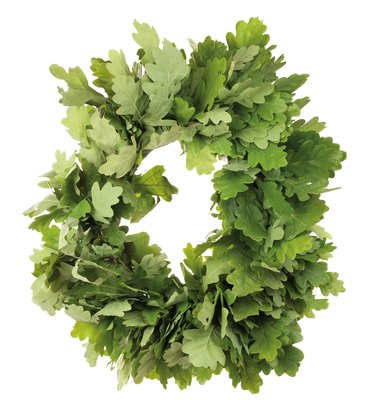
Using a solution of glycerin and water to maintain nature's beauty is an effective method of preservation that leaves flowers and leaves soft and pliable indefinitely. Glycerine is a clear, orderless liquid available at both pharmacies and craft supply stores. Glycerine-preserved stems can be used in crafts and arrangements and enjoyed for years to come.
Supplies Needed
Video of the Day
- Mature flowers and stems, free from blemishes
- Garden shears
- Hammer
- Measuring cup
- Boiling water
- Glycerine
- Heat-proof dish
- Wooden spoon
- 1 quart tall glass container
- Paper towels
Video of the Day
Step 1: Gather Your Materials
Chose mature woody stems with leaves and flowers that are not damaged or dry. Glycerine will not hydrate dry areas or repair blemishes and may even make them more noticeable. Roses, hydrangea, statice and babie's breath, as well as leafy branches and decorative grasses, offer good choices for preservation. Cut stems in the morning when they are fully hydrated. Remove leaves from the bottom 6 inches of the stem. Use a hammer to crush the lower 4 to 6 inches of the stem making it easier for the glycerine to absorb.
Step 2: Prepare the Glycerine Solution
Pour 2-parts boiling water to 1-part glycerine into a heat proof dish. Using a wooden spoon, gently stir solution until combined. Fill a tall glass container with approximately 6 inches of this solution. A clear glass container makes it easier to monitor the level of the liquid.
Step 3: Begin the Process
Place prepared stems in the warm solution ensuring that their crushed ends are covered. Store the container out of direct sunlight in a well-ventilated area and monitor daily; add more solution if needed to keep the glycerine at the 6-inch level. The entire process can take a few days to several weeks depending on the texture and thickness of the plant material used. Leaves that are fully submerged in the solution can take as little as two days to preserve. Larger blooms such as hydrangea can take two weeks or more. You'll know the process is complete when the entire leaf or bloom turns a golden brown and is soft, flexible and leathery to the touch.
Step 4: Storage and Use
Remove the preserved stems from the container when the solution has been fully absorbed. Carefully wipe off excess solution with paper towels. Place stems in a warm location to complete the drying process. Store stems in a dry dark area until they are ready to use. Glycerine-preserved leaves and flowers can be used in a variety of crafts and decor items lending themselves especially well to wreaths and arrangements.
Tips and Warnings
Glycerine will absorb moisture from the air, so it store in an airtight container when not in use. Unused solution can be stored this way indefinitely.
Laboratory grade glycerine can be expensive so opt for technical grade or vegetable glycerine. Glycerine can be purchased in small amounts at drug stores and craft stores or purchased in bulk online.
Fall leaves and smaller foliage from ivy, violets and hostas can be preserved by submerging completely in a 1-part glycerine to 1-part water solution. Pour solution in a shallow dish and use a plate to weigh down the foliage.
A soft brush or a hair dryer set on low can be used to gently remove dust from preserved materials.
- Clemson Cooperative Extension: Drying Flowers
- University of Florida IFAS Extension: Drying and Preserving Plant Materials for Decorative Uses
- Maryland Cooperative Extension: Preserving Flowers and Leaves
- Kansas State University: Preserving Flowers and Decorative Foliages with Glycerin and Dye
- Martha Stewart: Keeping the Color
- University of Kentucky: Preserving Flowers and Foliage