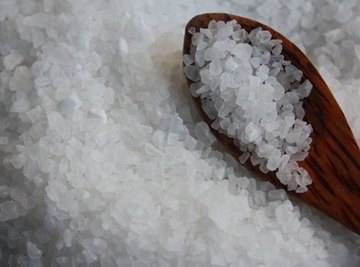

Calcium chloride (CaCl2) is a calcium salt of hydrochloric acid. It is a deliquescent salt, meaning it can liquefy by absorbing moisture in the air. It is used to maintain calcium levels in water, as a drying agent to melt ice, can be used to strengthen concrete and is used in fire extinguishers.
Water
Calcium breaks down easily in water, forming calcium and chloride ions. Calcium promotes plant growth, and chloride is an important micronutrient for plants and plays a role in photosynthesis.
Drying Agent
Calcium chloride is used on sidewalks, roads and in parking lots as a deicing agent. It does this by lowering the melting point of water so ice does not form.
Concrete
Calcium chloride is used as an accelerant in concrete. An accelerant typically increases strength, reaction or means the concrete settles in faster.
Fire Extinguishers
Calcium chloride has been used as an additive in fire extinguishers. After expiring, stainless steel extinguishers with calcium chloride should not be tested or replaced but destroyed.
Warning
Although calcium chloride is not flammable, toxic and does not burn, it can produce hydrogen atoms if it reacts with zinc and sodium. It is also corrosive to metals such as brass and steel. Calcium chloride pellets should not be ingested.
References
About the Author
David Kennedy attended Purdue University in West Lafayette, Indiana. After graduating with a Bachelors of Arts in creative writing, he has continued his writing career through online freelance work with Demand Studios. Kennedy writes informational articles related to health, medicine, industry, computers and education.
Photo Credits
Salt image by lefebvre_jonathan from Fotolia.com