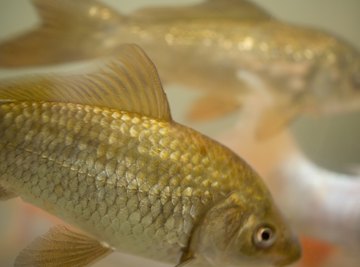

The molly (Poecilia sphenops) is a popular fish for the beginning aquarist. They're attractive and hardy and, given enough space, can get along with others. Mollies belong to a class of fish called livebearers. They don't lay eggs; their young come out swimming. And they are prolific breeders as well.
Molly babies get no protection from their parents. The tiny fish are just as likely to be eaten by their own mother as they are by other fish in the aquarium, so to survive they're going to need a little help.
- Fish breeding box or net
- Separate tank, filled with water (optional)
- Fish net, or other means of scooping out fish
- Plants
- Fish food
Preparation is the best insurance toward successfully caring for your molly fry. Plants should be in place, the pregnant females already separated. It saves you the time and effort of trying to separate the fish after they have been born.
Mollies are prolific breeders, so to control the population it's recommended that the sexes are kept separate. Males have a gonopodium, a modified anal fin used for reproduction. You can determine a young fish's gender after about 12 weeks.
Keep the babies' habitat clean. The breeder box or tank will need to be cleaned and its water changed. In a breeding net, the fry are exposed to the same water conditions the rest of the tank is experiencing.
Cannibalism is normal with mollies and other livebearers like guppies and platys. As fecund as they are, you don't really need to worry about saving every last one.
Gather the babies. The best-case scenario would be to have the pregnant female in a breeding box or net suspended in the water of the aquarium. In the case of a breeding box, the babies would drop into another compartment of the box and the mother would already be separated. In the case of a breeding net, you would have to scoop the mother out. If you can't get to the gravid female in time, you may need to capture the little ones and separate them from the other fish in the aquarium. Then you can use the breeding box, net or the separate tank to isolate the fry until they get large enough to fend for themselves.
If chasing tiny mollies around the aquarium doesn't do it for you (it also stresses them out), or if you just want to give the babies a little more protection, add real or artificial plants to the tank. Plants with leaves that float to the top of the tank will give the little ones a place to hide as they feed. Breeding grass also works for this purpose.
Feed your fish. Baby mollies can eat your regular fish flakes, crushed finely. Live baby brine shrimp are also a popular baby food. Do not overfeed them. In about eight weeks your baby mollies should be large enough to go into the tank with the other fish.
Things You'll Need
Tips
References
Tips
- Preparation is the best insurance toward successfully caring for your molly fry. Plants should be in place, the pregnant females already separated. It saves you the time and effort of trying to separate the fish after they have been born.
- Mollies are prolific breeders, so to control the population it's recommended that the sexes are kept separate. Males have a gonopodium, a modified anal fin used for reproduction. You can determine a young fish's gender after about 12 weeks.
- Keep the babies' habitat clean. The breeder box or tank will need to be cleaned and its water changed. In a breeding net, the fry are exposed to the same water conditions the rest of the tank is experiencing.
- Cannibalism is normal with mollies and other livebearers like guppies and platys. As fecund as they are, you don't really need to worry about saving every last one.
About the Author
Sonia Fernandez is a writer living in Santa Barbara, California. Her background is primarily in news, as a general assignment reporter for a local news website, but she also does the occasional magazine feature, Web article, short story or travel piece. She holds a Bachelor of Arts in English from the University of California, Santa Barbara.
Photo Credits
Jupiterimages/Photos.com/Getty Images