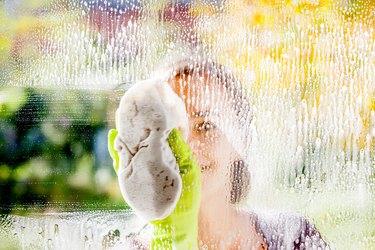
Stickers and tape adhere really well to glass surfaces; so much so that they're sometimes hard to remove afterwards. The longer they sit, the greater the chance they'll leave behind some adhesive residue. On the bright side, household substances such as rubbing alcohol, white vinegar, or even peanut butter usually do a great job of loosening the adhesive's grip on glass.
Warm, Soapy Water
Video of the Day
Sometimes warm, soapy water is all that's needed to loosen any adhesive residue clinging to a glass surface such as a window, tabletop, or a bottle. Mix a squirt of dish soap into a shallow bowl of hot tap water, then dip a sponge or lint-free cloth into the water, wringing out most of the moisture. Apply the cloth to the affected area of the glass and let it sit for 10 minutes or so. If you're working on a vertical surface, squirt the soapy water onto the glass a few times instead, wiping up the drips. For jars or bottles, simply let the items soak for 30 minutes or so in warm, soapy water in the sink.
Video of the Day
Gently scrape the glass with the edge of a sturdy plastic gift card, a plastic scraper, or the bowl of a plastic spoon, as a metal blade could scratch the glass. Wipe away any residue that comes up, then follow up with more soapy water as needed.
Rubbing Alcohol, Vodka, or Vinegar
It's sometimes difficult to remove old sticker or tape residue from glass, as the adhesive residue gets gummier over time. In this case, household solvents such as rubbing alcohol, vodka, or white vinegar often work well. Wet a sponge or a folded paper towel with your chosen liquid, then gently rub the adhesive residue with it. The type of scrubby sponge used on dishes comes in handy, as the scrub pad is gentle enough that it won't scratch the glass.
Scrape the area with a plastic scraper or a plastic spoon, following up with more alcohol or vinegar, as needed. For a stubborn spot, pour or squirt your chosen solvent on the spot and let it sit for five minutes or so before scrubbing. Repeat the solvent and scraping method several times to remove all the goo, then follow up by wiping the glass one more time with vinegar, which also cleans glass.
The Oil-Beats-Adhesive Method
Oily substances also work well to remove adhesive residue from surfaces; it's the same principle behind using peanut butter or olive oil to remove chewing gum from a child's hair. Apply an all-natural peanut butter to the adhesive and let it sit for a few minutes before wiping it up with a damp cloth. If using peanut butter seems too weird, apply a little olive oil or cooking oil instead, wiping it up with a dry paper towel. The oils make gooey adhesives less sticky and easier to remove from many surfaces.
Citrus-Based Adhesive Removers
Citrus-based products used for removing adhesive residue, gum, or tree sap are easy to use and easy to clean up. Products such as most Goo Gone formulas are ideal for cleaning any kind of gunk off glass. Apply enough of the citrus solvent to wet the adhesive residue, let it sit for a few minutes, then wipe it up with a paper towel or a soft cloth. Wipe the glass with a damp cloth afterwards or clean it with white vinegar to remove any remaining solvent.