

How to Apply Stucco Textures

Stucco is another name for Portland Cement Plaster. It can be applied both inside and outside. It can be colored and textured, and is fairly easy to keep in good repair. Stucco is best used in warmer climates, as repeated freezes and thaws can cause it to crack.

There are one-coat stucco applications available, although it is typically applied in three coats for best results. It does not adhere well to vinyl or aluminum siding, so it is best to remove old siding before applying mesh and stucco. Remove soffits before application, although you may wish to replace them afterward. Stucco can be applied with various tools, brushes or sponges to achieve different textures.
-
Have a professional test any existing stucco for asbestos. Older stucco often contains asbestos, which must be removed by a professional or encapsulated. Encapsulation means that the old stucco must be covered up entirely by new drywall if it is inside the home, or by plywood or some type of exterior thermal insulation sheeting if it is on the outside. Do not attempt to remove stucco containing asbestos on your own, as the dust it makes can cause lung disease or cancer when inhaled. Uncovered asbestos laden stucco can still make dust even if it is left alone, just by ordinary daily wear and tear on inside walls, and by weathering from wind, rain and ice on exterior walls. Asbestos use was banned in 1977, so new stucco does not contain asbestos, although it can contain fiberglass. Wear a painter's mask, gloves and coveralls when working with fiberglass laden stucco, as it can cause extreme itching when in contact with skin.
-
Apply mesh to the wall, once any old stucco has been removed by a professional or encapsulated. Mesh allows a rough enough surface and ensures that the stucco will adhere well. Chicken wire works well for exterior stucco, and burlap can be used indoors. For burlap, mix wall sizing according to package directions, in a plastic tub at least as long as the burlap is wide. Soak burlap in wall sizing and smooth onto walls using wallpaper smoothing tools. Allow to dry for 24 to 48 hours before applying the first coat of stucco. Use a staple gun to apply chicken wire.
-
Apply the first coat of stucco, making it as smooth as possible. After a few hours, wipe down with a damp cloth to make it even smoother. Allow 24 to 48 hours or longer to dry. Apply second coat of stucco and repeat wiping with a damp cloth after a few hours to smooth. Wait 24 to 48 hours or longer to dry.
-
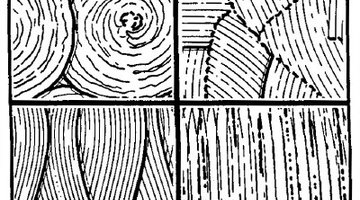
Apply third coat of stucco. Use a broom, a square of artificial turf, a texture roller or a trowel to make your texture pattern. Brooms make arcs, swirls and circles. Simply place flat edge of broom in contact with wet stucco and give a quarter turn for arcs, half turn for swirls, or 360-degree turn for circles. Artificial turf squares can make a pebbled effect. Texture rollers can make a pointed texture which can be blunted by wiping it down with a damp rag after it dries for 15 minutes to an hour. Texture rollers also make flower and other patterns.
Things You Will Need
- Stucco mix
- Texturing brushes, rollers, scrapers, sprayers and knives
- Paper painters' mask
- Painter's overalls or old clothes
- Painter's cap or plastic shower cap
- Plastic painter's gloves
- Burlap for indoor applications
- Wall sizing
- Wallpaper smoothing tool
- Chicken wire for outdoor applications
- Staple gun
Tip
Find various patterned texture rollers at builders' supply stores.
Warning
Do not attempt to remove old stucco yourself, as it could contain asbestos.
Writer Bio
Jane Smith has provided educational support, served people with multiple challenges, managed up to nine employees and 86 independent contractors at a time, rescued animals, designed and repaired household items and completed a three-year metalworking apprenticeship. Smith's book, "Giving Him the Blues," was published in 2008. Smith received a Bachelor of Science in education from Kent State University in 1995.
Photo Credits
- http://www.liquitex.com/Products/texgelmedceramstuc.cfm, http://home.howstuffworks.com/how-to-install-wall-treatments1.htm
- http://www.liquitex.com/Products/texgelmedceramstuc.cfm, http://home.howstuffworks.com/how-to-install-wall-treatments1.htm
More Articles

