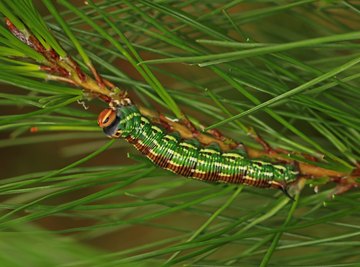
Metamorphosis is what happens when a caterpillar turns into a beautiful butterfly and a legless tadpole becomes a hopping frog. These metamorphosis examples are of both insects and amphibians -- the only creatures that go through this process. Amphibians are the only animals with a backbone that can do it. This process has many different stages depending on the creature but they all result in a remarkable physical change.
Insects that Undergo a Complete Metamorphosis
According to the Utah Education Network, about 88 percent of insects undergo a complete metamorphic process, which consists of four stages. Two examples of insects that undergo this type of metamorphosis are beetles and butterflies.
The first of the stages of metamorphosis occurs when the female insect lays her eggs. The next stage happens when the larvae hatch from the eggs. Caterpillars are the larval form of butterflies and maggots and grubs are the larval form of flies and beetles. The larva grows bigger during this stage and molts its skin multiple times.
The next stage is the pupa stage when the larva forms a cocoon around itself and remains in it anywhere from four days to a few months while it develops its body, organs, legs and wings. After fully developing, the butterfly or beetle breaks out of the cocoon.
Insects that Undergo an Incomplete Metamorphosis
About 12 percent of all insects undergo an incomplete metamorphic process, which consists of three stages. Two examples of insects that go through this type of metamorphosis include grasshoppers and dragonflies.
The first stage of this metamorphosis is when the female insect lays its eggs. The next stage is when the eggs hatch into nymphs, small insects that do not have wings. These nymphs shed and molt their exoskeletons between four and eight times, always replacing the exoskeleton with a larger one. By the time they have molted for the last time they have grown wings.
Frogs and Toads
Frogs and toads have a biophysical life cycle which, means they hatch amphibian larvae from eggs but the larvae live in the water until they metamorphose and are able to live on land. The life cycle begins when the female frog or toad lays her eggs in the water. The eggs eventually hatch and the tadpoles emerge with no legs, only a tail.
The tadpoles begin to grow and develop their lungs. After about six weeks the tadpoles' gills disappear and the tadpoles begin surfacing often to breathe oxygen. At about eight weeks old the tadpoles develop hind legs and then at 12 weeks old they develop front legs and their tail shrinks. Shortly after, the tail disappears and the mature frogs or toads hop out of the water.
Salamanders
Some breeds of salamanders have different life cycles than other breeds. Some types of salamanders, such as newts, lay eggs in the water where the tadpoles hatch and develop much like frogs and toads, except that they do not lose their tails. Other salamanders, such as the giant salamander, never leave the water even after the tadpoles metamorphose.
Other salamanders, known as sirens, never fully develop past the larval stage so they have lungs and gills but only two legs. Another type of salamander, known as the California slender salamander skip the larval stage and hatch as salamanders but never develop lungs or gills and instead breathe through their skin and membranes in their throat.