
Inhabiting waters across the United States, suckers are easy to overlook by anglers who search for more glamorous game fish like bass and trout. Despite their underdog status, suckers are hard-fighting and can grow to 20 inches in length or more, making them a worthy adversary for any angler. Common varieties like white sucker and redhorse sucker are also abundant and relatively easy to catch with basic bait and tackle.
Locating Suckers
You can catch suckers in a wide variety of water types, including lakes and ponds, but they are most commonly found in moving water. Rivers and streams with cool, clean water are ideal for sucker fishing, and these fish often share habitat with trout and smallmouth bass. Deep pools often hold suckers, especially pools in the main river immediately downstream from a feeder creek. Slack water on the downstream side of an eddy, logjam or rock pile may also harbor suckers. Another river feature to look for is a current break, or an area where fast-moving water and slower water meet. Suckers frequently congregate on the slow side of a current break.
Picking the Right Time
Spring is prime time for sucker fishing. Suckers move upstream during spring to spawn, usually feeding actively as they travel. According to In-Fisherman magazine, white suckers spawn when water temperatures reach about 45 degrees Fahrenheit, and redhorse suckers spawn at 54 F -- usually a few weeks later. As they follow seasonal spawning patterns, suckers congregate in predictable areas, whereas they tend to spread out more in summer and fall. Anglers who harvest suckers for the table also prefer spring fishing, and the Michigan Department of Natural Resources notes that their meat is firmer at this time of year.
Gearing Up
You don't need anything fancy to catch suckers, and bass fishing tackle on the lighter side does the job nicely. Light to medium-light spinning tackle with 6-pound-test monofilament line is standard. Tie a No. 6 size bait-holder hook to the end of the line, and add just enough weight to keep the rig on the bottom where suckers feed. Another option is to use a 1/8-ounce jig head instead of a plain hook and add a bobber or slip-float a few feet above, adjusting the distance between the bait and bobber so that your bait stays close to the bottom. This rig keeps your bait moving, which can be better when suckers are actively feeding in relatively shallow water.
Selecting Bait
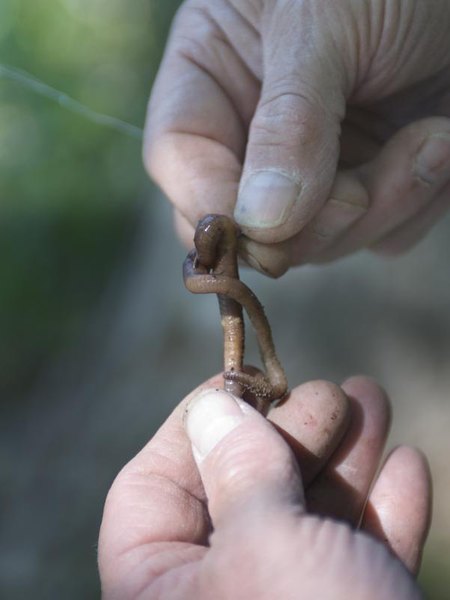
Night crawlers are the most common bait choice for suckers, and they are highly effective. Crawlers can be broken into halves or even thirds to make bait last longer. If you use red worms, which are smaller than night crawlers, use two or more whole worms to make the bait easier to see. Suckers will also strike other live baits, including leeches, small crayfish and minnows. While live bait is by far the most common sucker fishing tactic, fly fishermen can also find success with wet flies in nymph and scud patterns, along with flies that imitate worms and fish eggs.
References
- Field & Stream: Suckers: Fishing for Spring’s Most Overlooked Species
- Michigan Department of Natural Resources: Michigan Suckers Are Popular with Spring Anglers
- Bass Pro Shops: Springtime Suckers
- In-Fisherman: Slipfloating Suckers & ‘Horses
- Florida Fish and Wildlife Conservation Commission: Sucker Fishing in Northwest Florida
Writer Bio
When Richard Corrigan isn't writing about the outdoors, he's probably outside experiencing them firsthand. Since starting out as a writer in 2009, he has written for USA Today, the National Parks Foundation and LIVESTRONG.com, among many others, and enjoys combining his love of writing with his passion for hiking, biking, camping and fishing.