
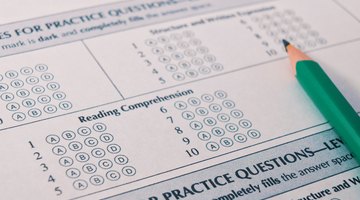

When you take a reading test, the goal is to prove that you've read each selection well and understand it thoroughly. Everything you write needs to focus on answering the questions as correctly, completely and clearly as possible. An open ended question is often the most challenging kind to answer, but taking the proper steps can help ensure you answer to the best of your ability and earn the highest grade you can.
Go to the end of the test and read the questions thoroughly before you begin to read the selection. This will help you focus on what key ideas to be looking for when you read.
Read the open ended questions a few times, and underline or highlight the key words -- if allowed -- in the questions that tell you what you need to do. For example, if a question says to give two examples from the text, make sure you watch, as you read, for two examples to include in your answer.
Read the selection carefully, keeping the test questions in mind, and mark by underlining or some other method the sections of the reading that you think will help you in answering the questions.
Compose your answers by using information from the reading selection. Do not rely on your previous knowledge. Instead, prove that you have read and understood the selection by using information from the reading.
Restate the question in your answer, borrowing words from the questions. This will help you be sure that you have answered the question in a focused manner.
Look back in the text when you are finished drafting your answer to make sure your writing is correct, clear and complete. Double check the questions, paying attention to the key words you underlined to see if you answered all parts of the questions. Give yourself at least five minutes to review your response and see if there are any other supports from the selection you can add, or any other revisions you need to make.
Tip
Pace yourself at the beginning of the test. Evaluate how long you have to read and respond to the answer, and check the clock to keep yourself on track. You don't want to spend an inordinate amount of time reading, and not leave yourself enough time to respond to the question.
Try to leave yourself five minutes at the end for a last minute review to see if you need to make any changes.
Related Articles







References
Tips
- Pace yourself at the beginning of the test. Evaluate how long you have to read and respond to the answer, and check the clock to keep yourself on track. You don't want to spend an inordinate amount of time reading, and not leave yourself enough time to respond to the question.
- Try to leave yourself five minutes at the end for a last minute review to see if you need to make any changes.
Writer Bio
This article was written by the CareerTrend team, copy edited and fact checked through a multi-point auditing system, in efforts to ensure our readers only receive the best information. To submit your questions or ideas, or to simply learn more about CareerTrend, contact us [here](http://careertrend.com/about-us).