Voyagerix/iStock/Getty Images
Blackheads are dark bumps visible on the surface of the skin. While they are medically harmless, their appearance can be embarrassing and distressing for the person involved. Blackheads are most common in “the T Zone,” an area of skin on the face covering the forehead, nose and chin. Sometimes the affected area can also spread across the cheeks. On the body, blackheads are most common on the chest and back. Blackheads are a form of acne vulgaris, and may co-occur with the other skin lesions associated with acne.
What Causes Blackheads?
Your sebaceous glands are structures in the deeper layers of skin that release sebum, an oily substance that is made up of fat, wax and dead skin cells. This functions to moisturize and waterproof the skin. If a constant flow of sebum is not maintained, the sebum becomes stuck in the sebaceous gland's duct. Oxygen in the air reacts with the sebum and darkens it, forming a dark plug of matter called a blackhead or open comedo.
Who Gets Blackheads?
Blackheads are very common in people with oily or combination skin, especially in cooler climates. In warm climates the flow of sebum remains almost constant, and so the sebum does not remain in the duct long enough to be oxidized. Although inadequate cleansing can cause blackheads to form, most people with blackheads get them because of their oily skin type, no matter how good a cleansing regime they have. As adolescents are more likely to have oily skin than older people, they are the population most likely to have blackheads.
Cornstarch And Vinegar Mixture
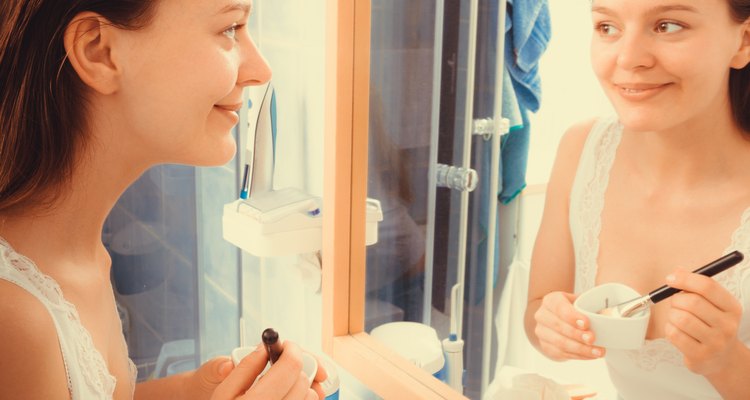
Cornstarch and vinegar is a commonly used home treatment for blackheads. Pour ¼ to ½ cup of cornstarch into a bowl and add vinegar slowly while stirring. Add the vinegar until the mixture forms a thick paste. Apply the mixture to the blackhead affected areas on your face and leave on for 20 minutes. The mixture will dry to a hard plaster-like substance in the meantime. Rinse it off with warm water, and follow this with a cold water rinse to close the pores.
How It Works
Cornstarch is a mild astringent, reducing the amount of oil produced temporarily. It also absorbs a large proportion of the oil that is on the surface of the skin at the time of application. Vinegar is an acid, and acids can reverse oxidation. In other words, vinegar can bleach the blackheads, turning them to their original pale clear/yellow color. For best effects, use this mixture two to three times per week.
Warning
This mixture is not suitable for people with sensitive skin. You should do a patch test at least 24 hours before applying the face mask, and do not use this remedy if you are allergic to any of the ingredients.
Related Articles

Benzoyl Peroxide-Free Acne Products
How to Get Lighter Skin Without ...

How to Use a Toner on the Face

What Are the Ingredients in Proactiv?
What Are the Ingredients in Elizabeth ...
How to Use Sugaring Paste on Your Upper ...
Avocado Masks for All Skin Types
The Best Facial Moisturizer That Won't ...

How to Bring White Back From Yellowing ...

How to Remove Eyeglass Coating With ...
How to Get Rid of Underarm Shadow
Negative Effects of Endermologie

How to Mix Bronzer With Moisturizer

How to Apply Dr. Palmer's Fade Cream
Help for Red Marks After Facials

How to Remove Hair With Ant Egg Oil

How to Whiten Jeans
The Best Facial Moisturizers for People ...

How to Bleach a Mustache With Honey & ...

How Can I Remove Ball-Point Ink From ...
References
Writer Bio
Chris Lombard has been writing professionally since 2009. She has a background in psychology and healthcare. Lombard writes for many mental health related sites, including the peer support site Turn2me.org. Lombard holds a Bachelor of Arts degree in psychology from Trinity College Dublin, and is currently pursuing a Master of Science degree in foundations of clinical psychology from Bangor University, Wales.
Photo Credits
Voyagerix/iStock/Getty Images