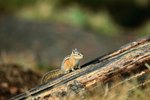
How to Care for a Baby Chipmunk. If you find a baby chipmunk out of the burrow alone and he is easy to catch, there is no sign of mom or he is extremely thin, he may be in need of help. However, it is important to remember that mom could be around looking for food and the baby may not be orphaned. Here's how to take care of a baby chipmunk.
Leave the baby chipmunk where she is for a few hours and monitor her from a distance, if possible. It is alright to put a hot water bottle under the baby if you think she is cold, but do not cover her to keep her warm or mom might not be able to find her. If mom hasn't returned to the baby within a few hours or if darkness is coming and there is still no signs of mom, then the baby chipmunk needs help.
Consult your local government wildlife agency to find out if it is illegal for you to care for wildlife in your state. If they tell you it is illegal, ask them who you should call to help the baby chipmunk.
Contact a wildlife rehabber to help the baby chipmunk. If you can't find one listed in your local yellow pages, call an area vet's office or animal shelter and they should be able to give you a phone number. A wildlife rehabber is trained and skilled in caring for wild animals and releasing them back into the wild, without making them pets (see Resources below).
Check the area where you found the baby chipmunk to see if there are litter mates that are also orphaned and in need of help. Continue checking the area for up to a week.
Set up a habitat, in a cage, to house the baby chipmunk if you have decided to care for him yourself. Put pine chips in the bottom of the cage to create a soft bed. Use light or a hot water bottle to provide heat.
Rehydrate the baby chipmunk with a rehydration solution, such as Pedialyte. Warm the Pedialyte to body temperature and then feed it to the baby chipmunk use an eye dropper or a syringe. Give them her some of the solution every couple of hours for the first 12 hours after finding her.
Feed the baby chipmunk esbilac, which is a puppy milk replacer that you can purchase at a vet's office and some pet stores. Do not give cow's milk or any other food to the chipmunk. Wrap the baby chipmunk in a towel and hold him firmly, with his eyes covered, while feeding the esibilac using an eye dropper or a syringe.
Tips
It is important that you stimulate the baby chipmunk to urinate before and after every feeding. To do this, wet a cotton swab with warm water and rub it gently over the chipmunks genitals. This should cause her to urinate or defecate. Handle the baby chipmunk as little as possible, and only during care and feeding. Do not domesticate the chipmunk and treat him like a pet. Release the baby chipmunk into the wild when she is around 9 or 10 weeks old. Before releasing her, make sure she is eating, urinating and defecating on her own. Release her in a wooded area with plenty of vegetation, rock outcroppings, trees and a water source. It is best to release her in early morning so she has all day to get settled in her new home.
Writer Bio
This article was written by the CareerTrend team, copy edited and fact checked through a multi-point auditing system, in efforts to ensure our readers only receive the best information. To submit your questions or ideas, or to simply learn more about CareerTrend, contact us [here](http://careertrend.com/about-us).