

What Colors Would Go Well With a Pale Yellow Wall?

Yellow creates a warm, sunny feeling for any room. Using a pale yellow shade for your walls is an attractive option because it is light enough to give the room a spacious feel but still bright enough to liven up its look.
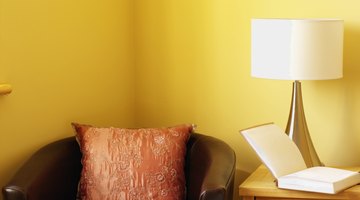
A pale shade also allows for more color combinations, so you can choose from a variety of looks for your room based on the style and color palette that you prefer.
Monochromatic Gold
For a simple but striking look, pair pale yellow walls with similar shades from the yellow family, but opt for darker, golden yellow shades to add dimension to the pale wall color. Camel-colored upholstered furniture provides a subtle, elegant contrast to the paler yellow walls, while curtains in a goldenrod color add drama to the window. Include accessories in a neutral shade like white, cream or ivory. White provides a crisp look, but cream and ivory have warm undertones that pair well with the warm yellow shades.
Blue and White Coastal
For a fresh, beachy feel, use your pale yellow walls as the background for a coastal-inspired room. Blue, white and yellow as a beach cottage color palette provide a fresh, clean look that works well in a living room, bedroom or family room. Pair your yellow walls with blue furniture or bedding, but pick up the wall color with throw pillows and accessories that feature touches of pale yellow. Add sheer white curtains to the windows to create a bright, airy feel. Natural fiber rugs like sisal, jute or sea grass work best in coastal décor, but a blue and white striped area rug may be a good fit, as well.
Garden Fresh Green and Pink
In the bedroom, pair your pale yellow walls with bright green and pink for a fresh, garden-inspired look. The yellow walls simulate sunshine, while the green and pink accents represent the garden’s growing blossoms. Look for floral patterns that incorporate all three shades for the bedding and windows. If you find that the green and pink are too bright for the room, add white to balance out the bold colors. Pair pastel shades of green and pink with pale yellow walls for less-bright versions. The resulting look is soft and subtle.
Tuscan-Inspired
For a cozy, inviting living room, dining room or kitchen, use your pale yellow walls as the foundation for a Tuscan-inspired room. Pair the yellow with other warm, rich shades like terracotta, apricot, olive green and chocolate brown and incorporate darker shades of yellow, like gold. Tuscan décor usually includes blue shades to contrast with the warm tones for added dimension, so look for rich sea-inspired blue accessories to balance out the room’s look. In a kitchen, a blue mosaic backsplash can look particularly attractive when paired with yellow walls.
References
Resources
Writer Bio
Based in New York City, Jennifer Blair has been covering all things home and garden since 2001. Her writing has appeared on BobVila.com, World Lifestyle, and House Logic. Blair holds a Bachelor of Arts in Writing Seminars from the Johns Hopkins University in Baltimore, Maryland.
Photo Credits
- George Doyle/Stockbyte/Getty Images
- George Doyle/Stockbyte/Getty Images
More Articles

