

How to Clean the Drain in a Maytag Dishwasher

Your Maytag dishwasher works best if all the parts are kept clean. While many people clean the racks and outside of the dishwasher regularly, it can be easy to skip cleaning the drain.
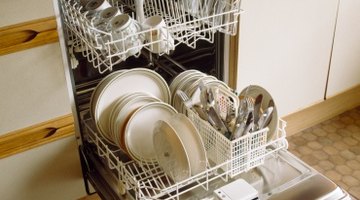
Over time, food and other deposits can build up in the drain, causing your dishwasher not to drain properly, leaving food and water along the bottom of the dishwasher and on your dishes. Instead, cleaning your drain every six months will keep your dishwasher working well for years.
Things You Will Need
- Kitchen gloves with long arms
- Sponge
- Dishwasher liquid
- Vinegar
- Liquid measuring cup
-
Put the kitchen gloves on your hands. Make sure they cover at least part of your arm, since you will be reaching in and cleaning inside the dishwasher.
-
Remove any noticeable debris from the bottom of your dishwasher. Most dishwashers with dirty drains will have some debris. Wipe down the area with a sponge and dishwasher liquid.
-
Run the garbage disposal on your sink if you have one. Turn on the cold water and allow it to run as you switch on the garbage disposal. The garbage disposal is directly connected to the drain of your dishwasher. Running the garbage disposal can clean out any debris from the drain line.
-
Remove the drain cover at the bottom of the dishwasher. For most dishwashers this simply pulls out, but you may need to unscrew it.
-
Scrub the inside of the drain with the sponge and dishwasher liquid. You may find more debris that needs to be removed prior to scrubbing.
-
Place the cover back on the drain. Do not run your dishwasher without the drain cover or debris may end up in your drain.
-
Place 2 cups of vinegar into the liquid measuring cup. Run your dishwasher empty except for the measuring cup full of vinegar. Make sure the measuring cup is on the bottom rack of the dishwasher. This finishes cleaning the drain in your dishwasher.
Warning
Drainage problems can be caused by a kink or problem in the drain line. If you continue to have problems, check your drain line.
If you recently installed a garbage disposal to your dishwasher, check that the knockout plug has been removed or you will have problems with drainage in your dishwasher.
Never use dishwashing liquid in your dishwasher, only soap that is designed for the dishwasher, like dishwasher liquid, gel or powder.
The Drip Cap
- Your Maytag dishwasher works best if all the parts are kept clean.
- Over time, food and other deposits can build up in the drain, causing your dishwasher not to drain properly, leaving food and water along the bottom of the dishwasher and on your dishes.
- Remove any noticeable debris from the bottom of your dishwasher.
- Scrub the inside of the drain with the sponge and dishwasher liquid.
- This finishes cleaning the drain in your dishwasher.
References
Writer Bio
Jacqueline Gonzales is a professional writer specializing in education, family and home topics for various home and garden websites. Gonzales is working on her first romance novel.
Photo Credits
- Design Pics/Valueline/Getty Images
- Design Pics/Valueline/Getty Images
More Articles

