Buying a diamond can require a lot of patience and tenacity. Finding the perfect balance between quality and price can often be quite difficult. Knowing how rate diamond quality and clarity while you're on the search for the perfect stone can help you be more efficient during the shopping process. There are several considerations to be aware of, including clarity, cut, color and carat weight. Knowing what to look for and what questions to ask can make a big difference in purchasing a quality stone.
- Jewelers loupe
- Grading report
- White piece of paper
Examine the diamond closely under natural lighting. Examine the stone for visible inclusions and blemishes. You may see some on the surface or inside the stone. The more inclusions, the lower the clarity rating. If the stone appears perfect with the naked eye, the clarity of the stone will be rated anywhere from slightly included to flawless. A jewelers loupe and experienced diamond grader will give an official clarity rating.
Using a jeweler's loupe, look at the diamond under the magnification to find any inclusions you could not see with the naked eye. Good-quality diamonds will only have inclusions and blemishes visible under magnification of a jeweler's loupe.
Examine the color of the diamond by holding it against a white piece of paper. The more yellow the stone appears in color, the lower the color quality of the diamond. The more white the diamond appears, the higher the color grade. Diamonds are graded on a scale starting with the letter D and then moving down the alphabet. A diamond that is colorless and shows no yellow coloring is rated D, E or F. Diamonds that have a faint yellow color to them are rated G and beyond.
Ask the jeweler to see the grading report. The grading report will give you a detailed description of the diamond, including carat weight, color, cut and clarity ratings. The grading report will also say whether or not the stone has been treated artificially to hide imperfections or inclusions.
Examine the stone for how much light it reflects. The more sparkle and scintillation the diamond has, the better quality of cut. If the cut is not of good quality, light escapes through the side or bottom of the diamond and it will not reflect light as brightly.
If a grading report does not exist for the diamond, take the diamond to a reputable jeweler to have it appraised. With an appraisal, you can get the cut, color, carat and clarity information that you need to rate the diamond's quality.
Things You'll Need
References
About the Author
Shauna Heathman is a certified image consultant with a passion for writing, and has been writing since 2006. She has maintained a blog of her own for three years in which she writes on topics concerning self development, appearance, style, etiquette and communications. Heathman has a bachelor's degree in communication studies and an entrepreneurship certificate from the University of Iowa.
Photo Credits
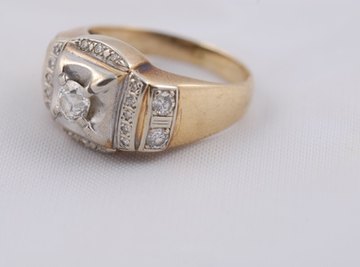
men's diamond ring image by jimcox40 from Fotolia.com