
What does fact checked mean?
At SportsRec, we strive to deliver objective content that is accurate and up-to-date. Our team periodically reviews articles in order to ensure content quality. The sources cited below consist of evidence from peer-reviewed journals, prominent medical organizations, academic associations, and government data.
The information contained on this site is for informational purposes only, and should not be used as a substitute for the advice of a professional health care provider. Please check with the appropriate physician regarding health questions and concerns. Although we strive to deliver accurate and up-to-date information, no guarantee to that effect is made.
How to Gain Weight on the Thighs & Buttocks
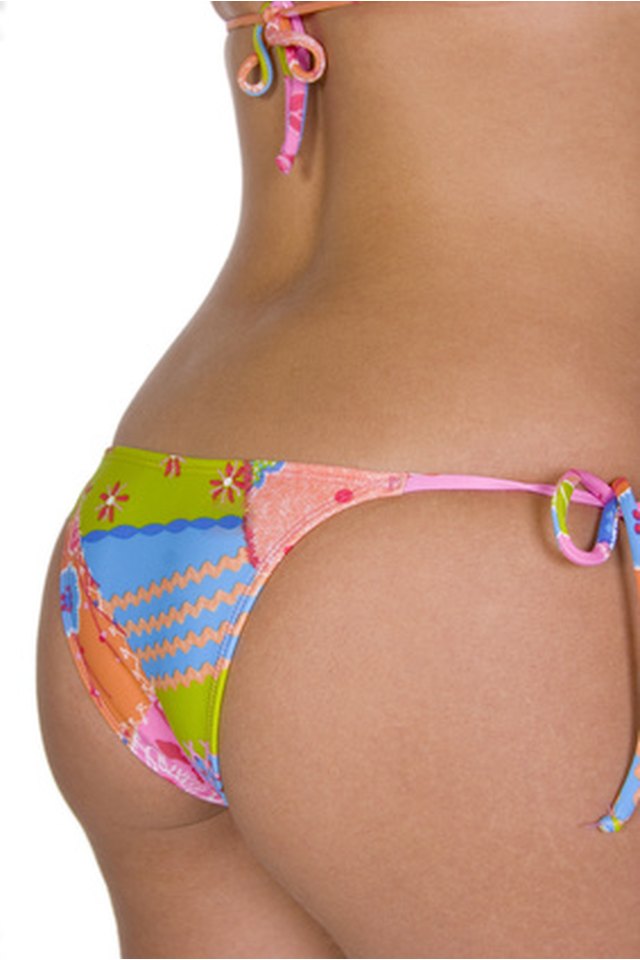
The era when the word skinny ruled the world is over. To get the derriere and thighs you always dreamed of, you will need to make some minor lifestyle changes. All you need to do is combine working the thigh and butt muscles with changing your diet. While you may dread doing this, when you look at yourself in the mirror in eight weeks, you'll be glad you made the effort.
Change your diet. To build up more muscle tissue in your thighs and buttocks, you need to consume more quality calories. Get rid of processed food, refined grain products, fatty meats and fast food. Instead, feed your body with fruits, vegetables, lean meats, fish, whole grains, seeds, foods high in fiber, and low-fat dairy products. The latter group will help in building healthy muscle tissue instead of creating fat deposits.
Have five or six meals throughout the day. Your body is building muscle all day and it needs fuel consistently. If instead, you have three big meals, you will likely put on weight in the wrong places.
Do cardio exercises twice a week for a maximum of 30 minutes. Short cardio exercises increase your metabolism, which will help your body to create muscle tissue. Stick to this routine and don't overdo it. Lots of cardio exercises result in losing general weight instead of gaining it.
Introduce some butt routines into your workout. Take the squat, for example. Stand with your two legs one foot apart. Bend your knees slowly and lower your body until your knees are fully bent. Hold for three to five seconds. Extend the knees until you are standing straight again. Repeat 15 times. Do three sets each day. This will build and firm your gluteal muscles. This exercise also works on the quadricep muscles in your upper legs, making it a perfect exercise for both thighs and buttocks.
Introduce some upper leg routines into your workout. Balance the work among all the upper leg muscles. Work your hamstrings, quadriceps, abductors (outer thighs), and adductors (inner thighs). Do not give excessive attention to a particular leg muscle, as this may result in imbalanced muscles. Take the lying abduction, for example. It works on the inner thigh muscles. Lay down on your side with your head resting on one arm, your other arm resting extended on your hip, your hips stacked and your legs extended straight away from your body. Gently raise the upper leg off the lower leg about two inches. Raise the upper leg again until both legs make a 45-degree angle. Slowly lower and raise the upper leg without making contact with the lower leg. Repeat 15 times. Alternate legs. Do five sets each day. This will build and firm your thighs.
Drink plenty of water. Muscle tissue is made of 75 percent water. No surprise why you would need to drink more water. Also, an increased level of hydration improves your energy level, which you will need for your cardio exercises.
Warnings
Consult your doctor whenever you are planning to change your diet and exercise levels.
References
Warnings
- Consult your doctor whenever you are planning to change your diet and exercise levels.
Writer Bio
Cristina Garcia has been a freelance writer since 2009 when she published her first travel ebook. She is a zoologist and has several years of wildlife research experience studying wild canid ecology and behavior. She holds a master's degree in geographical information science from the University of Edinburgh in the U.K., specializing in satellite remote sensing techniques for ecology.