Things You'll Need:
- Jewelry ideas
- Sketchbook
- Jewelry making class
- Work space
- Jewelry supply source --local store or on-line
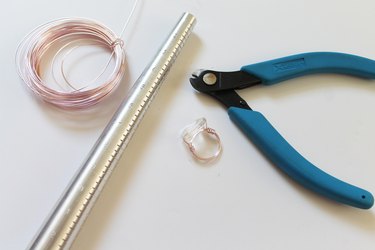
- Jewelry pliers
- Jewelry wire cutters
- Jewelry findings, such as clasps, necklace connectors, earring parts, headpins, wire or crimp beads
- Beads
- Jewelry supply storage containers
-
Step 1
Figure out what type of jewelry you want to make. Write down your ideas and draw sketches of your designs in a sketchbook. This can be an exciting outlet for your creativity. Look at jewelry in magazines. Go to craft shows to see handcrafted jewelry. Visit museums and get inspired by art and historic jewelry. You can find inspiration in nature by taking a walk. Keep the photos and magazine clippings in a file folder or scrapbook for future reference. Take your sketchbook everywhere and sketch your ideas as they come to you.
-
Step 2
Take a jewelry making class to learn techniques and find out what type of supplies are needed. You can find jewelry-making classes at local jewelry supply stores, the YMCA and community colleges. On-line courses are another way to learn jewelry- making skills. Look in the phone book and on-line for classes in your area.
-
Step 3
Designate an area of your home for work space. Jewelry making requires many supplies that will take up space. You also need an area to spread out and work on your jewelry projects. Find a comfortable, well-lit area of your home to design jewelry and store your supplies. Set up a large table that allows you to have plenty of room for numerous projects. Get a chair that will support your back and be comfortable when working for hours.
-
Step 4
Find a good jewelry supply resource. Look in the phone book for local jewelry supply store listings. These stores may be listed as “bead shops.” Do not limit yourself to the local suppliers. Look on-line for jewelry supply stores. Many on-line suppliers offer discounts for bulk beads. Shop around for the best quality and price.
-
Step 5
Buy quality beads and tools. Shopping at local jewelry stores will allow you to examine beads, components and tools in person. On-line, you will have to rely on the item description and photo posted by the merchant. Ask a jewelry making class instructor on recommendations for places to buy quality beads and supplies. Find out if they recommend particular brands for tools such as wire cutters and pliers.It also helps to understand the bead grading system. Gemstone beads are available in grades. Grade A beads are near perfect with the most shine, no flaws and better cuts. Grade B beads are a good quality with few flaws. Grade C and lower will have less shine and more flaws.
-
Step 6
Make a list of the type of jewelry supplies you will need for your jewelry projects. Are you making earrings, necklaces, bracelets, rings or brooches? Look through a jewelry catalog before you go to the store to make your list of supplies. Common jewelry-making supplies include beads, wire, thread, cord, jewelry pliers, jewelry wire cutters, crimp beads and clasps. Get an understanding of the components you need for your project before you shop. The components you need for making a type of jewelry are called "findings." Typical earring findings are ear studs, hook ear-wires, ear-wire clutch or ear-nuts. A variety of necklace and bracelet findings are available. You can choose from many different styles of pendants, connectors and clasps. Brooches need mountings. You can buy a setting for a ring or make your own. The possibilities are endless.
-
Step 7
Keep your jewelry making supplies organized in storage containers. You will be able to work faster and find the beads and components you need if you are organized. Jewelry supply stores have special storage containers with small compartments for beads and findings.
-
Step 8
Set a jewelry making schedule so that you have time daily, or weekly, to work on projects. This can be your time to relax and be creative. Jewelry making is a rewarding and fun hobby.