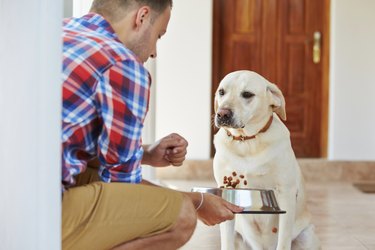
Wheat germ is a canine supplement for an addition to your dog's daily ration of food. Veterinarians often advise pet owners to include wheat germ in a dog's daily feedings to help with skin problems, dull, dry hair and to regulate both immune and inflammatory responses in a dog's body. Consult with your veterinarian on the correct amount needed to supplement your dog's diet and what form of wheat germ to use.
Wheat Germ Benefits
Video of the Day
Wheat germ has several benefits when dogs consume it. It gives dogs energy and supports physical and mental performance on a daily basis. Wheat germ is a natural product that has vitamin E and omega-3 and -6 fatty acids for a shiny, soft coat and healthy hydrated skin. Veterinarians at VCA Animal Hospitals use it to promote undercoat growth, reduce skin itchiness from allergies, shedding and reduce inflammation.
Video of the Day
Wheat Germ Oil
Wheat germ is available in a liquid oil form in a bottle. It is palatable to most dogs and can be poured on top of the daily rations of kibble, or mixed in with soft or canned dog food. Most dogs don't realize that anything is different on the food and will eat it at each meal. Consult your veterinarian to determine how much wheat germ oil your furry friend needs. The dosage varies by weight.
Powdered Wheat Germ
Wheat germ in the powdered form is quite dry and can be hard to feed a dog unless he eats soft or canned food. Most pet owners make tasty dog treats with powdered wheat germ and feed their pet one treat a day to get a daily supply and obtain the benefits. Dog treats should be limited to less than 10 percent of his daily food intake. A simple recipe is to mix 3/4 cup of powdered skim milk with 1/2 cup of wheat germ, add 3 small jars of chicken or beef baby food without onions. Mix it well and bake for 10 to 14 minutes on a cookie sheet coated with nonfat cooking spray in a 350 degree preheated oven.
Wheat Germ Tablets
Some dogs can put up a fight and lock their jaws when they see a pill or capsule coming their way. Wheat germ tablets are in a chewable form that most pets will accept easily if you tell them it is a "treat." The capsules break open when bitten and release wheat germ oil into a dog's mouth; some dogs refuse to take an oil capsule. The easiest way to feed your fur friend a tablet or capsule is to hide it in a soft dog treat, or wrap a small piece of cheese around it. Offer him two treats or pieces of cheese that are not "loaded" with the pill, then the one with the pill, followed by an additional one or two pieces of cheese. He normally will gobble up the "loaded" treat in anticipation of the next one and not notice the pill or capsule inside. You can purchase specialized hollow treats made for inserting pills for your pack member.
Always check with your veterinarian before changing your pet’s diet, medication, or physical activity routines. This information is not a substitute for a vet’s opinion.