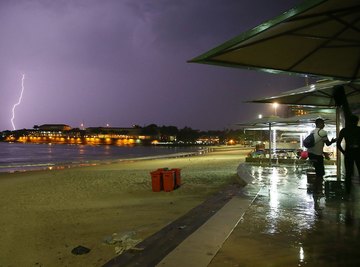

Lightning strikes can be quite terrifying. The flash of light from the lightning paired with the booming clap of the accompanying thunder can bring a shiver down your spine even when you're safely indoors. Though the odds that you will be struck by lightning are less than one in a million, lightning strikes still pose a serious – and potentially fatal – danger.
How to Protect Yourself From Lightning
You can't control or predict where lightning will strike next, so how can you protect yourself from lightning? The best way to protect yourself from lightning is to seek shelter when a lightning storm rolls through and to remain indoors when a storm is forecasted. You should take shelter in an enclosed building with walls such as your home, a shopping center or retail store, etc. You can also seek shelter within a vehicle, but soft-top convertibles pose a greater danger than hard-top cars.
What Is the 30-30 Rule for Lightning?
The 30-30 rule is a guideline to help you understand when you should seek shelter during a thunderstorm. If you spot lightning, you should count to 30. If you hear thunder before you reach the end of your 30 count, you should move indoors to safety.
Every five seconds equals approximately one mile of distance between you and the lightning. If lightning strikes within six miles of you, you should seek shelter. Thus, anything shorter than 30 seconds between a lightning strike and the corresponding thunder means that the lightning is too close for comfort!
Once you stop hearing thunder, you should wait for 30 minutes prior to returning to outdoor activities. This provides enough time for the thunderstorm to fully leave your area.
What Should You Do if You Can't Reach Shelter?
If you didn't check the forecast before leaving your home, and you are too far out to reach adequate shelter – always try to reach shelter first and foremost – there are very few things you can do to protect yourself from lightning. With that said, the following actions can reduce your chance of being struck by lightning:
- Seek low ground. Lightning is more likely to strike high ground such as hills and mountain peaks.
- Avoid isolated or singular trees.
- Move away from any bodies of water such as lakes or ponds.
- Crouch low to the ground, but do not lie flat on the ground.
What Should You Not Do During a Lightning Storm?
It's important to know what to do during a lightning storm, but what should you not do during a lightning storm? Even while indoors, it's possible for you to be injured by a lightning strike, so you should avoid higher-risk activities. During a thunderstorm:
- Do not interact with water. Don't bathe, wash your hands or use any running water as lightning can travel through your plumbing.
- Do not use corded electronics. Televisions, corded phones, radios and all electronics plugged into your wiring can be struck by lightning.
- Do not come into contact with concrete walls or floors. The wiring and bars within concrete can conduct electricity.
Common Myths About Lightning
- Myth: A person who has been struck by lightning is electrified and you can shock yourself by touching them. In reality, if someone has been struck by lightning they cannot continue to hold a charge and you should provide first aid to them as quickly as possible.
- Myth: You are safe from lightning if it isn't raining and there are no clouds above. In reality, lightning can strike as far as three miles away from a storm. Always use the 30-30 rule to be sure the storm has moved far enough away.
- Myth: You should seek shelter under a tree during a thunderstorm. In reality trees, particularly lone trees, are more likely to be struck by lightning!
References
About the Author
Marina Somma is a freelance writer and animal trainer. She holds a B.A. in Psychology and a B.S. in Marine and Environmental Biology & Policy from Monmouth University. Marina has worked with a number of publications involving animal science, behavior and training, including animals.net, SmallDogsAcademy and more.
Photo Credits
Mario Tama/Getty Images News/Getty Images