How to Buy Pearls
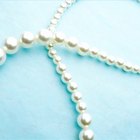
Versatile and classic, pearls are a worthwhile investment that can soften a business suit or add more elegance to a dress. Here's what to look for.
- Difficulty:
- Moderate
Instructions
-
General Considerations
-
1
Decide whether you want natural, cultured or imitation pearls. Keep in mind that imitation pearls are costume jewelry and are of very little value; natural pearls are almost impossible to find in stores and often aren't as high in quality as cultured pearls.
-
2
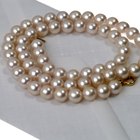
Choose a pearl shape: round, symmetrical or baroque and/or irregular. Spherelike round pearls are the most expensive and highly prized. Symmetrical pearls, such as those shaped like teardrops, should be evenly shaped.
-
3
Consider pearl size, the most important factor in price. The larger the pearl, the costlier it will be.
-
4
Decide if you want a double-strand necklace of smaller pearls (cheaper) or a single strand of larger pearls (more expensive).
-
5
Place pearls directly under a light on a flat, white surface in order to inspect them.
-
6
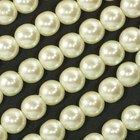
Inspect each pearl for luster. Lustrous pearls have a shiny surface, good contrast between light and dark areas, and strong, crisp reflections. Avoid pearls that resemble dull, cloudy white beads.
-
7
Look at the pearl's 'orient,' a play of iridescent rainbow colors'characteristic of high-quality pearls.
-
8
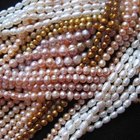
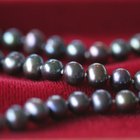
Examine pearl color, which can be white, yellow, black, gray or various other colors. Ask whether the color is natural or dyed; the latter is less expensive. More exotic natural colors are more expensive.
-
9
Inspect the pearl's 'overtone,' a tint secondary to the main body color. Pinkish overtones can increase pearl price, while green or blue tints may lower the price.
-
10
Verify the pearl's cleanliness by checking that it has minimal surface blemishes such as nicks, cracks, pits or discoloration.
-
11
Turn the pearl in your hands to examine it from all angles. Color, shape, smoothness and luster all may vary within a single pearl. Roll a strand of pearls on a flat surface to test them for roundness'round pearls roll more smoothly and evenly.
Distinguishing Real Pearls From Imitations
-
1
Run the pearl lightly along the biting edge of your front teeth. A real pearl will feel slightly gritty or sandy, whereas a fake pearl will feel smooth. This is a standard test for authenticity that most sellers will allow, as long as you ask first.
-
2
Look at and feel the pearl. Absolutely flawless-looking pearls, as well as those that feel unusually light when you bounce them in your hands, are probably fake.
-
3
Examine the pearl under a 10magnifier (a loupe). Imitation pearls appear grainy.
-
1
Tips & Warnings
Pearls offered at unbelievably low prices are probably fake.
Related Searches
Comments
-
trilady66
Dec 18, 2007
I took the advice of "eHow Friend" 8/8/2006 and ordered a pearl necklace set from Pearls by Angela Carol which cost nearly $1,100. I had them shipped by FedEx overnight express. After waiting for three days and no delivery I called the company and left a message on their answering machine requesting a tracking number. I waited another two days (no delivery and no response to my first call) and called again and left another message. I also called FedEx who to my dismay informed me that Pearls by Angela Carol didn't ship my jewelry. It appears that I have been scammed by an elaborate website run by crooks. I'm sorry that I didn't shop at our local high end jewelry store. -
delawaremba
Jun 27, 2007
One way not to buy pearls is through Angela Carol. The user ahead of me listed several online sites and she was the first listed. After 8 days the order had still not shipped and I was under an anniversary deadline. Despite numerous attempts via email, phone and fax, I was not responded to. I canceled the order and reordered through Pearls of Joy. They answered the phone when I called and were able to get the order in hand the next day. That's customer service. I will repost when I inspect them. I am still not convinced that these online pearls will be up to my standards but I hope to be surprised. -
Aug 08, 2006
Mall jewelry stores, such as Zales or Kay's, have lines of Mikimoto pearls that are made just for them. They are generally of lower quality than the lines that you find in exclusive Mikimoto stores. The grades that you will find at your Mall stores will generally be AA grade (which would be the second to the lowest grade of pearl - A, AA, AA+ and AAA). The AAA grade Mikimoto pearls could cost you more than $10,000 for a single necklace. It should be noted though that these same quality of pearls are available from other sources at significantly lower prices. While it is a scary thing sometimes to buy jewelry online, there are some online stores that specialize in nothing but pearls. They buy these pearls directly from the pearl farms in China and Japan (the same farms that produce supply Mikimoto and other high end lines), string the pearls themselves and then sell them directly to the public. The people that run these businesses are much more versed in quality, luster, grading and nacre thickness than anyone in your local Mall store. The names that come to mind (and that I have done business with) are Pearls by Angela Carol, Pure Pearls, Pearls of Joy and Pearl Paradise (just to name a few). At these online stores you can find AA+ and AAA grade pearls and prices that are significantly less than what you would pay for lower grades in your mall store. Also, if you talk to the companies, you will also find that they have a limited number of Hanadama grade pearls. These are more expensive than the AAA grades, but that is due to how rare they are. The Hanadama grades would be the equivalent of the $10,000 Mikimoto line but these stores sell them for much less because there are not middle men and the overhead is low. To find these companies, just search for their names on the web. -
Nov 22, 2005
In addition to preventing the loss of more than one pearl, knotting prevents pearls from rubbing against each other. This rubbing can result in a chipping of the nacre coating of the pearl around the hole. Pearls are a very soft gem. -
Nov 22, 2005
In addition to preventing the loss of more than one pearl, knotting prevents pearls from rubbing against each other. This rubbing can result in a chipping of the nacre coating of the pearl around the hole. Pearls are a very soft gem.