
How to Wrap an Ace Bandage for a Shin Splint
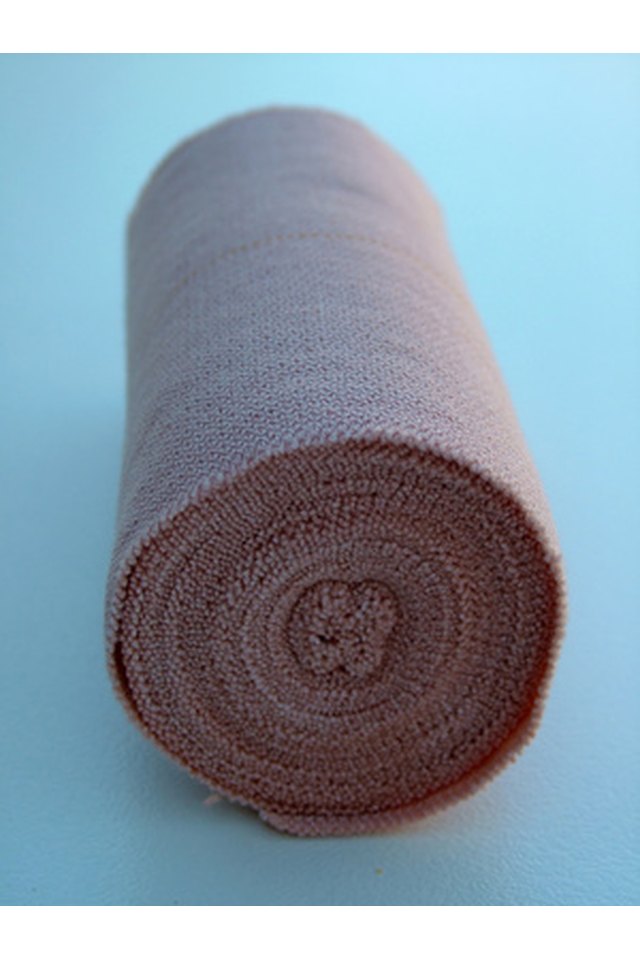
Shin splints are a common injury among runners and other athletes caused by the extreme pressure on the legs, especially with high mileage and hard surfaces. Shin splints consist of extreme tenderness and pain along the inner and outer shins. Along with icing your shins and resting frequently, wrapping your lower legs with an Ace bandage--an elastic bandage commonly applied to injuries--can help alleviate the pain of shin splints. The Ace bandage will put pressure on the shins, compressing the muscles and minimizing the discomforting movements.
Hold one end of your Ace bandage just above the ankle.
Wrap the Ace bandage all the way around your leg, forming layers and gradually working up your leg. Wrap the Ace bandage around your leg until you get to the knee. You want to stop wrapping just about an inch below the knee cap.
Pull any slack out of the Ace bandage, ensuring that it is tightly wrapped.
Tuck both ends of the Ace bandage beneath the wrapping, and secure both ends with a strip of athletic tape.
Tips
Keep wrapping your legs while running or exercising; shin splints can take three to six weeks to go away.
An orthopedist can recommend orthotics or proper running shoes for your feet, which can help alleviate and prevent shin splints.
Warnings
See an sports doctor if your condition worsens.
Doctors agree that while suffering from shin splints, you should exercise less and give your shins time to heal.
Do not wrap the bandage too tight or you will cut off blood circulation.
Remove or loosen the bandage if the area becomes swollen or numb.
References
Writer Bio
Ginger Yapp has been writing professionally since 2006, specializing in travel and film topics. Her work has appeared in such publications as "USA Today" and online at Hotels.com. Yapp also has experience writing and editing for a small California newspaper. She earned her B.A. in film and media studies and has worked as an ESL teacher at an international school.