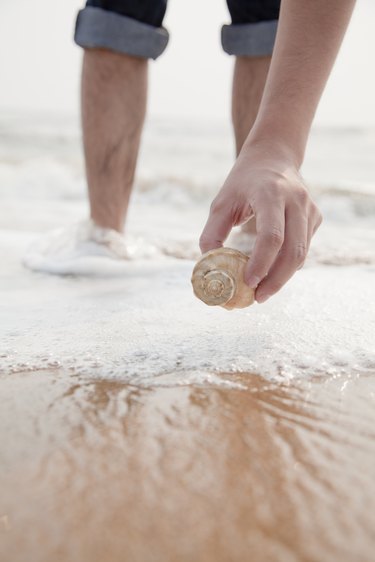
Seashells make pleasing souvenirs from your beach vacation, whether you display them on a shelf or turn them into a crafted keepsake. If they aren't cleaned well, however, they will create a less enjoyable memory if they start emitting unpleasant odors. Cleaning them will remove odors and restore shine.
Cleaning Live Shells
Video of the Day
If you collect live sea specimens, such as conchs, clams or oysters, the first step to turning the shells into mementos will be removing the critters from their homes. There are several ways of doing this. If you have a lot of time and patience, bury the shells in the yard deep enough that animals won't smell them and dig them up -- at least 18 inches deep should work. Leave them there for a couple of months until the insects and microorganisms in the soil have taken care of the sea creature. Dig the shells up, rinse them in vinegar and water, and then proceed to clean them like dead shells.
Video of the Day
You can also put the shells in water and freeze them, then return them to room temperature and remove the animal inside. Boiling or microwaving works, but those methods will probably make the house smell rather noxious. After any of these methods, use a strong stream of water or dental pick to remove all the membranes.
Cleaning Dead Shells
Once you are sure that nothing living -- or the remains of anything living -- is inside the seashell, you're ready for the bleaching process. Soak the shells in equal parts household bleach and water until the outer layer of the shell, known as the periostracum, is gone. Rinse the shell thoroughly in clean water, then use a dental pick, toothbrush or soft wire brush to remove any barnacles or other deposits. Don't put naturally polished shells in bleach, as it will destroy the shine of the shell.
You can clean sand dollars in much the same way. Begin by soaking them in clean water until it turns muddy, then rinse them and soak them in water for a second time. After that, soak them in equal parts bleach and water for no more than 20 minutes.
Cleaning Naturally Polished Shells
Shells such as cowrie and conus have a natural shine that can be damaged by harsh treatment. To clean them, soak them in ethanol, which is 90 percent pure alcohol, until the outer layer is clean. If they still have an unpleasant smell, drip bleach into the shell's interior cavity, taking care not to drop it onto the polished surface.
Keeping the Polish on Shells
To give your shells a wet, just-out-of-the-ocean look, rub them with mineral oil. Don't use baby oil or vegetable oil, as these will turn rancid in time and smell unpleasant. For a more permanent shine, spray them with satin or gloss polyurethane. Protect your delicate shells, especially sand dollars, from direct sun, as this can make them brittle.