Things You'll Need:
- Garden Hoses
- Potting Soil
- Shovels
- Spades
- Shovels
-
Step 1
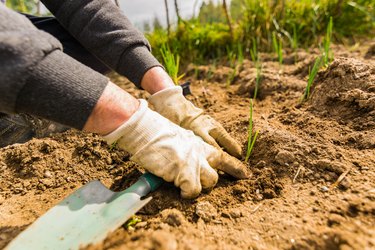
Cut an outline around the uneven area by inserting a spade into the turf. Place your foot on the base of the spade and push into the soil 3 to 4 inches. You're going to remove the turf, but first you need an outline to follow.
-
Step 2
Slice the turf with the spade across the middle of the outlined area to make the sod more manageable. Pieces of sod should measure 18 to 24 inches wide.
-
Step 3
Insert the spade under the sod and gently slice the roots as you shove the spade under the turf. You want to retain as much of the root growth as possible. (This is the hardest part of the job. Sometimes those roots just don't want to let go. Try not to tear or rip the sod pieces.)
-
Step 4
Lift and roll the loosened sod as you cut away the roots.
-
Step 5
Set the reserved sod in a shady area and keep it moist to prevent the roots from drying out.
-
Step 6
Flatten the uneven area with a spade or shovel by adding or removing soil to match the level of the surrounding soil. Be sure to take into account the 1 to 2 inches of soil that's still attached to the sod.
-
Step 7
Water the prepared area.
-
Step 8
Lay down the previously removed sod onto the prepared soil. Adjust the sod's dimensions to fit the area.
-
Step 9
Fill small cracks in the turf with more soil.
-
Step 10
Keep the newly leveled area moist, especially the seams and most especially during hot weather.
-
Step 11
Water the lawn normally after the sod becomes re-established.


Comments
dmacman said
on 3/13/2009 grear article i may have to try it
yoli1428 said
on 6/20/2007 my lawn in the backyard isn't even a lawn, it is just a field of weeds appox. 3ft tall the ground is severly uneven making mowing a 4 to 5hours job. this method describe does not sound reasonable for a yard of this size approx an acre of grass space behind the house and what about weeds whos roots are an inch or more thick and deeply embeded what can i do is there any help without cost being outrageous
Anonymous said
on 11/22/2005 Though this method may look less attractive, it requires much less effort. Sprinkle a one inch layer of soil over the low spots, use a rake to work it into the soil so that the grass blades can be seen. It may help to water these areas when working the soil down. Or, you can let it be and wait for the grass to grow up through the newly applied soil. After the grass has re-established itself, you can repeat the process again. Do this as often as needed until your low spots are filled in. Watch out for weeds when you do this!
For raised bumps, if you own a garden tractor you can rent or purchase a roller that flattens these bumps as you pull it behind the tractor. This works better when the soil is damp to wet, but not muddy. If you dont own a garden tractor, visit your local tool rental or borrow one from a friend.