Things You'll Need:
- Dairy Products
- Leafy Green Vegetables
- Yogurt
- Calcium Supplement
- Magnesium Supplement
- Vitamin D
- Dumbbells
-
Step 1
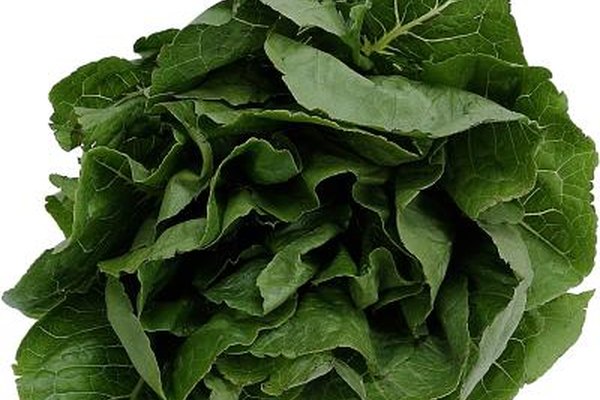
Eat a diet high in calcium and vitamin D. Some good foods are dark green leafy vegetables, broccoli, sardines, salmon, kelp, oysters and dairy products.
-
Step 2
Try not to eat whole grains and calcium-rich foods at the same time. Whole grains contain a substance that binds with calcium and prevents proper absorption.
-
Step 3
Enjoy foods that contain sulfur. Good ones are garlic and onions.
-
Step 4
Pass on phosphate-containing foods such as soft drinks. Phosphorus causes the body to excrete calcium.
-
Step 5
Limit or avoid high-protein animal foods. A diet high in protein causes calcium to be excreted from your body.
-
Step 6
Decrease caffeine consumption.
-
Step 7
Exercise daily if possible. Weight-bearing exercise, such as running, weight lifting or dancing, is best for bone health.
-
Step 8
Add supplements of calcium, magnesium and vitamin D if you aren't sure that you are getting enough in your diet.
-
Step 9
Supplement your diet with silica; it helps your body absorb calcium.
-
Step 10
Add bone-building herbs to your diet. Alfalfa, barley grass, dandelion root, nettle, parsley and rose hips are a few good ones. Take as a tea, tincture or tablets.


Comments
Ck2008 said
on 7/29/2009 Great article! very informative. Thank you.
Beavertalk said
on 1/30/2009 great tips, Thanks!
Anonymous said
on 3/23/2006 Use (preferably) resistance exercises that directly load particular regions of the skeleton. e.g. use exercises that reach or exceed a threshold stimulus of bone to stimulate new bone formation in the area experiencing the mechanical strain. This threshold is called MES: Minimal Essential Strain which is thought to be approximately one tenth of the force required to fracture the bone.
Use structural exercises, that is, exercises that involve many muscle groups at once, direct force vectors through the spine and hip, and allow greater absolute loads to be used in training. Once accustomed to the stimulus variation in exercise is a must to stimulate the bone formation to a higher level.
Deposition of new bone can be expected after 6 to 12 weeks of mechanical loading and is independent of age or reproductive hormonal status.