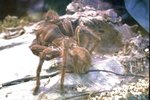
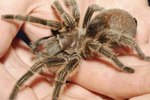
The Texas brown tarantula is a handsome, solid-looking beast, but not especially large, skittish or venomous, making the species a fairly good choice for people new to spider care. Provided her basic needs are met, your new pet could live for several decades, so bear this in mind before rushing to add a tarantula to your household.
Natural History
The Texas brown tarantula (Aphonopelma hentzi) inhabits the deserts and grasslands of the southern states – the species is not restricted to Texas, hence its other common names Oklahoma brown tarantula and Missouri tarantula. In the wild, they lead solitary lives outside the breeding season, with baby tarantulas leaving their mother a few days after hatching.
Considerations
Texas browns may bite if scared or provoked and, although the bite is unlikely to be dangerous unless you are allergic, it will be painful, roughly equivalent to a bee sting. Be patient with your tarantula and don’t pick her up with your bare hands until she is completely accustomed to you. Small children must be supervised around tarantulas, and get a lock for the tank if you have kids of your own. Females live far longer than males -- up to 40 years compared to about 10 -- making them as seriously long-term commitment.
Tank
The tank does not need to be enormous -- 10 gallons is big enough. This is a burrowing species, so include several inches of a safe substrate, such as chemical-free potting compost, when preparing the tank. Don’t keep more than one tarantula in a tank – they're not sociable. You’ll also need a hygrometer to measure humidity, and a shallow dish for water. The tarantula would also appreciate a large piece of bark as a hiding place.
Food
Like other spiders, Texas brown tarantulas exist on a diet of small invertebrates. In captivity, they'll take pet crickets, grasshoppers and other live prey of a suitable size. Tarantulas don’t need fed all that often -- a couple of items once or twice a week is usually enough. Note that you should never provide any food while your pet is moulting. She won’t eat it, and a live insect could badly damage her at this vulnerable time.
Maintenance
Daily maintenance consists of removing any dead insects and other debris and changing the water. Mist the tank with dechlorinated water as required to maintain a relative humidity of 50 to 60 percent. Tarantulas do not produce much mess, but the tank needs to be cleaned properly once or twice a year. Transfer your tarantula to a holding container and throw away the substrate. Wash out the tank with dishwashing liquid and water, then rinse thoroughly. Dry the tank, add fresh substrate and replace the accessories, water dish and tarantula.
References
Writer Bio
Judith Willson has been writing since 2009, specializing in environmental and scientific topics. She has written content for school websites and worked for a Glasgow newspaper. Willson has a Master of Arts in English from the University of Aberdeen, Scotland.