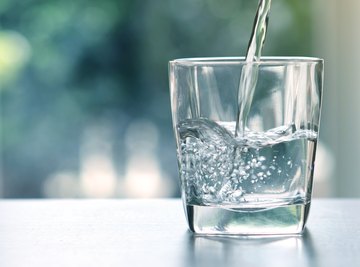
Water may be sometimes be described as being hard water and soft water. The distinction rests on the amount of dissolved minerals within the water. Hard water contains a high amount of minerals, and soft water contains little to none.
Hard Water and Soft Water: Origins
Water accumulates dissolved solids as it moves through rocks and other substrates, like limestone, gypsum or dolomite. Calcium and magnesium are particularly soluble in water, and if these naturally occurring minerals are within the geographical area, the residents surrounding the water source will have hard water.
In the United States, areas of the East Coast generally have soft water, and those in the southwest have hard water. Rainwater, since it has not percolated through soil substances like groundwater has, is considered soft.
Hard Water and Soft Water: Levels
The characteristics of hard water and soft water are determined by the amount of minerals in water, measured in milligrams per liter or in grains per gallon. Hardness also depends on the pH and temperature of the water.
The American National Standards defines soft water as containing less than 17.1 mg/L; however, the following levels may be used to approximate water hardness:
- Soft: 0 – 60 mg/L
-
Moderately hard: 61
– 120 mg/L* Hard: 121
– 180 mg/L * Very hard: 181 mg/L and above
Chemical Properties of Hard Water
Common contributors of water hardness are calcium, Ca, and magnesium, Mg. Both elements are alkaline earth metals found in Group 2 on the periodic table. The elements in the Group 2 column have a 2+ charge and lose two electrons to form cations, such as Ca2+ and Mg2+. These cations easily dissolve in water.
Calcium carbonate, CaCO3 is a common substance in rock formation, especially of limestone, a type of sedimentary rock and dolomite, CaMg(CO3)2, also a sedimentary rock. Calcium carbonate is also found in the shells of marine organisms and eggs.
When rainwater with dissolved carbon dioxide, CO2, filters through calcium carbonate, the calcium ions dissolve in the water. The following chemical equation describes this process:
CaCO3(s) + H20(l) + CO2(aq) → Ca2+(aq) + 2HCO3-
Where the calcium carbonate, CaCO3, forms Ca2+ and bicarbonate , HCO3-, in the presence of water and carbon dioxide.
Types of Hard Water
The properties of hard water are described as temporary and permanent. Temporary hard water contains bicarbonate, HCO3-. Permanent hard water contains bicarbonate ions with other ions like sulfate, SO42-. Boiling does not precipitate out the permanent hardening species, and sodium carbonate, Na2CO3, would need to be added.
Properties of Hard Water: Forming Precipitates
When hard water is heated, it often leaves a coating on pots or containers. Note that the equation for this precipitate is the reverse for the Ca2+ ions dissolving in aqueous solution:
Ca2+(aq) + 2HCO3- (aq) → CaCO3(s) + H20 (l) + CO2(aq)
The calcium carbonate precipitate, CaCO3, is called scale. While being frustrating to clean, it is not a health concern.
The precipitate can build over time; however, and this may affect the life of appliances like dishwashers and washing machines and any plumbing pipes. The build-up constricts the space where water is able to flow, and appliances and pipes would need to be replaced.
Properties of Hard Water: Surfactant Interference
As mentioned above, hard water contains dissolved minerals that can cause problems for consumers by leaving deposits in plumbing and appliances. Hard water also interferes with the effectiveness of many household cleaning products.
The Ca2+ and Mg2+ ions interfere with the surfactant qualities of soap. A surfactant lowers the surface tension of water allowing it to maintain contact with a solid surface, like clothing or a bathroom sink. The ions interfere with the surfactant's process, and this often requires additional laundry or cleaning agent to complete a task.
The minerals in hard water also combine with soap to make a sticky or hazy film on dishware and in bathtubs, showers and sinks. This film can also coat clothing, skin and hair, making clothing seem dingy, causing dry or irritated skin or hair that is dull and unmanageable.
Hard Water and Soft Water Advantages
Hard water does have an added health benefit. Calcium and magnesium are important minerals the body needs for the growth and function of bones and muscles. These minerals also regulate blood pressure and enzyme actions. Consuming hard water may be a source of these minerals.
Soft water does not have the negative effects of mineral deposits on household appliances and plumbing pipes. It lacks the mineral taste of hard water and does not leave residues on skin, dishes or other surfaces.
Methods of Softening Hard Water
A household water softener works by ion exchange. When the hard water is passed through an ion exchanger, it flows by layers of polymer (plastic) beads that are covalently bound to anion groups, such as:
- –COO-
- sodium
- Na+
- or potassium
- K+ cations
As the water passes by these beads, the calcium and magnesium ions displace the sodium or potassium ions.
Water Softeners: Advantages
The benefits of water softeners are cleaner laundry, longer-lasting appliances and no sticky soap buildup. Consumers use less laundry detergent and other types of cleaners and detergents. Clothing is brighter, and sinks, tubs and showers require less cleaning.
Water appliances such as boilers, water heaters and dishwashers typically run more efficiently and need less maintenance as soft water does not cause scale buildup in pipes and plumbing fixtures. Soft water users often report hair and skin feel less dry and flaky.
Water Softeners: Disadvantages
The disadvantages of water softeners include the high cost and effort involved in maintaining a water-softening system. A water softener and its installation may cost thousands of U.S. dollars, and water softener salt must be added on a regular basis.
Water softeners are water-intensive in the regeneration process, using up to 25 gallons of water per day. The flushing of water softeners with a salt solution can have negative impacts on the environment. This water, with its high sodium content, is not recommended for watering plants, lawns or gardens.
Health-wise, softened water contains more sodium than hard water, and this can be problematic for people who must limit their dietary salt intake. Because much of the calcium and magnesium have been removed, soft water does not provide a source for these minerals in the diet.
References
About the Author
Rosann Kozlowski is currently a freelance writer and tutor. She has a Master's Degree in Chemistry from the University of Oregon and has previously worked in the pharmaceutical industry and has taught at the middle school, high school, and college levels.