eHow launches Android app: Get the best of eHow on the go.

How To

How to Teach Kids to Bake

Contributor
By eHow Contributing Writer
(0 Ratings)

Baking books for children are a good idea for the photos and simple to follow instructions. However, you can save money and invest instead in good baking equipment your child can help you select. Just about any basic baking recipe, from muffins to cakes to cookies, can be followed by children with adult supervision. There are so few things a young child can control in his or her life, but letting them take charge of baking something yummy for the family gives them a sense of empowerment, and everyone benefits from the results.

Difficulty: Easy
Instructions

Things You'll Need:

  • Utensils needed for any recipe
  • Ingredients needed for any recipe
  • Apron to fit child
  • Ingredients and utensils for chocolate chip cookie recipe
  • Parchment paper
  • Ingredients & utensils for basic bread recipe
  • Ingredients & utensils for basic pie recipe and filling

    How to Teach Kids to Bake

  1. Step 1

    Explain a few basic techniques and terminology before starting a recipe.Explain that the oven must always be at the temperature indicated in the recipe before you put anything into it. Show her where the oven temperature is located in the recipe. It should always be the first step.Explain "mies in place". This is the French cooking term for "put in place." In the baking world, it means to get everything ready and out before starting recipe. A good baker doesn't discover she's short of eggs half way through creating a masterpiece.Explain creaming. It is blending in soft ingredients, usually butter, then sugar then eggs. Sometimes vanilla or other flavoring is added.Creaming is usually done with an electric mixer which should only be used by an adult.Explain dry ingredients. Measure and stir them together in a separate bowl. They are usually flour, baking powder/soda, salt. Dry ingredients are measured in measuring cups and spoons.Explain mixing. Usually dry ingredients are slowly incorporated into ingredients that were creamed together.Explain wet ingredients. Wet ingredients are sometimes added during the creaming stage or added after dry ingredients have been incorporated. Milk is an example of a wet ingredient. Wet ingredients should be measured in a liquid mixing cup.Explain kneading as rolling dough back and forth with hands on floured surface

  2. Step 2

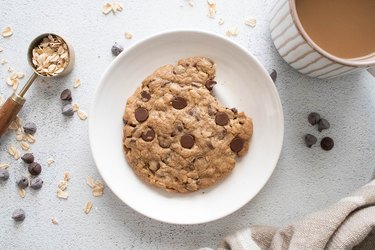
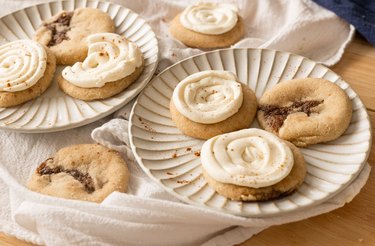
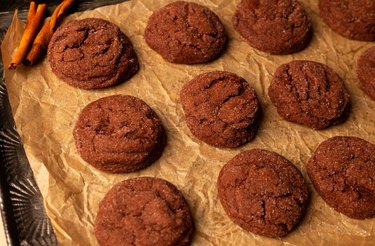
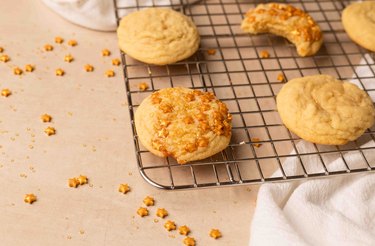
    You're ready to start baking. Preheat oven to the temperature in the recipe. Put baking shelves in middle of the oven, not at bottom or top. Begin with a chocolate chip cookie recipe. The one on the back of a bag of chocolate chips will do for starters unless you have a favorite. A basic chocolate chip recipe incorporates creaming, mixing in pre-measured dry ingredients and then stirring in chocolate chips. The best way to bake cookies is to use parchment paper, found in the plastic wrap section of the store. Parchment paper helps cookies from burning.

  3. Step 3

    Move onto another easy recipe such as cupcakes. You can use just about any cake recipe for cupcakes but they'll need less baking time. You can buy fun cupcake papers at craft stores. You can also make mini cupcakes if you have the right pan. You'll need mini cupcake papers too. A basic cupcake recipe incorporates creaming, mixing, wet and dry ingredients. Follow instructions or use a standard cupcake recipe. Cupcakes are done baking when they "spring back" after you touch them. If your fingerprint stays imprinted, they need more baking time. Wait until completely cooled to frost. Tint frosting with natural food coloring available at most stores, organic markets and craft stores. Decorate with sprinkles and enjoy. Don't forget to preheat oven.

  4. Step 4

    Making bread isn't as hard as some people think. You'll need several blocks of time for the dough to rise, but you can do this while running to the store or doing a few loads of laundry. You'll need fresh or dry yeast, usually found in prepared dough section of store. You'll also need a large bowl, flour, salt, water and a candy thermometer for the water temperature. Be sure to follow directions to proof the yeast, which means you want to see bubbles. That means the yeast is working. Don't worry about measuring flour exactly. This is a rare exception to baking rules. You want dough that is sticky but not too sticky. A stick proof mat is good for kneading the dough, which is a fun activity for children. Your child can knead, roll and shape the dough. The mixing should be done by an adult, especially if you're using an electric mixer or food processor.

  5. Step 5

    Making pies is for the child baker with some previous experience. This is a good example of when ingredients must be very cold, including flour, water and butter. Use ice water. Put the flour in the refrigerator overnight before using. Use cold butter cut into small pieces. The reason for having everything cold is that when the heat in the oven hits the pie dough, the butter will melt and cause steam pockets, which means flaky crust. Another thing to teach your child is the more they handle pie dough, the tougher it will be. Only mix the dough until it comes together and is still sticky. Always let the dough rest, wrapped in plastic, in the fridge for at least a half hour to make it easier to roll. There are tons of fillings. You can get them from a can, use chocolate pudding, sliced apples, berries and whipped cream. Play around a bit. Have a game of dough tossing after it's rolled into a ball. The worse thing that could happen is that you have to dust it off a bit after it falls on the floor.

Tips & Warnings
  • Teach your child that baking is a science. Each ingredient must be measured accurately as they all need to work together
  • Be prepared to clean up a mess. Part of the fun of baking is to get your hands in the mixture. Baking with your child should be fun, not a chore.
  • Always break eggs in separate container before adding to mixture in case one is bad
  • Buy your child a children's apron. They are available online or at cookware stores. Some department stores carry them in the small appliance or cookware section.
  • When making cookies containing butter, don't place too close togehter on baking sheet or they'll spread into each other
  • Cookie batter can be frozen for a month in airtight bag. Roll into small balls, flash freeze in freezer on baking sheet and put in bag. When ready to bake, place directly on sheet and pop into preheated oven.
  • Never let your child open the oven. You can turn the oven light on and let him look in instead
  • Never let your child (under the age of 10) add an ingredient directly into an electric mixing bowl as her fingers may get in the way and cause injury
Subscribe

Post a Comment

Post a Comment

Related Ads

  • Have you done this? Click here to let us know.
I Did This
Get Free Food & Drink Newsletters

Copyright © 1999-2009 eHow, Inc. Use of this web site constitutes acceptance of the eHow Terms of Use and Privacy Policy.   en-US Portions of this page are modifications based on work created and shared by Google and used according to terms described in the Creative Commons 3.0 Attribution License.

eHow Food and Drink
eHow_eHow Food and Drink