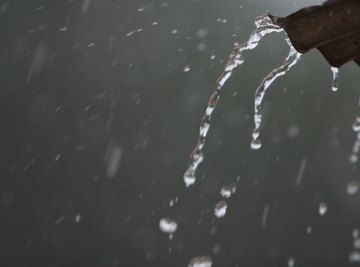
Every time an inch of rain hits a 1,000 square foot roof, 620 gallons of water rush through the gutters and downspouts. During heavy rain, this can cause sewage overflow and flooding. Those small rain barrels under your neighbor's eaves actually help reduce these problems, even if you find them tacky. Understanding the purpose of rain barrels may inspire you to set up some yourself.
Rain Barrel Operation
Rain barrels can vary in set up and style, but their overall design and operation is the same. According to Cornell Cooperative Extension, a pre-made rain barrel costs $100 to $150, and you can make one yourself for much less.
The typical small rain barrel, which holds about 55 gallons of water, is made of food-grade plastic. An old wine barrel can also be used. A hole is cut in the top of the barrel, and the downspout from a gutter is redirected so rainwater collects in it. When it rains, the barrel fills up with water.
Two smaller holes are cut into the side of the barrel – one near the top and one near the bottom. The top hole serves as an overflow outlet for times when the barrel fills up. Many rain barrel owners choose to direct this overflow into their lawn with a length of hose. The bottom hole has an attached hose bib and allows the barrel owner to access the water in the barrel.
How This Helps
If several hundred gallons of water rush into the sewage system from a single 1,000 square foot roof, imagine how much water flows into it from a typical neighborhood.
In a natural system, rainwater hits the ground, filters through the soil and percolates back into underground reservoirs, and then slowly reenters waterways. In a city, paved streets, parking lots and driveways create a blockage in this natural cycle. Instead of slowly finding its way back to streams and rivers, the rainwater quickly runs off into waterways or washes into sewage systems.
This sudden flow not only washes contaminants from roads into the water, but it also increases the risk of flooding. Overwhelmed sewage systems spill waste into rivers. Small rain barrels help reduce these problems by keeping some of the water from rushing too quickly into the system.
Water Conservation Benefits
Using water from rain barrels helps conserve water. Rather than using municipal water to water the lawn or wash the car during dry periods, the person with a small rain barrel can instead use stored rainwater.
About 30% of water is used for lawn and garden care, notes Penn State University. Using water from rain barrels instead of from the tap to water your garden conserves fresh drinking water.
Using rainwater may not make a big dent in lowering water bills, but conserving fresh water is an important environmental issue, especially as weather patterns change around the globe.
Using Rain Barrel Water
Rain barrel water should be used only in the garden and never for drinking. Some concerns have been raised about the safety of using rain barrel water on vegetable gardens because chemicals leaching from roofing tiles can be taken up by the plants and animal waste can get into the water. Chemicals can get washed into rain barrels, and insects and pathogens can breed in standing water, notes University of Arkansas Cooperative Extension Service.
To reduce the likelihood of contamination, use rain barrel water on ornamental plants, grass and trees, and reduce rain barrel water use on edibles once fruit begins to set and before harvest time. Also take care to reduce mosquito growth in rain water barrels by emptying your barrels frequently so the water does not become stagnant.
References
About the Author
Based in Portland, Ore., Tammie Painter has been writing garden, fitness, science and travel articles since 2008. Her articles have appeared in magazines such as "Herb Companion" and "Northwest Travel" and she is the author of six books. Painter earned her Bachelor of Science in biology from Portland State University.
Photo Credits
Photos.com/Photos.com/Getty Images