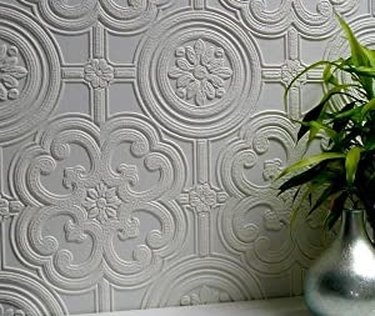
Painting over textured wallpaper, also known as anaglypta, can be considered a home improvement faux pas among designers. It's risky — wallpaper, especially old wallpaper, often has bubbles, rips, and frayed edges, and it attracts dust, which leaves you with a rough painting surface. However, painting over wallpaper is possible, and it's a great way to make a space your own.
To create textured walls without needing to apply putty or other materials under the paint, paint over textured wallpaper.
Video of the Day
Video of the Day
Things You'll Need
Paint
Paintbrush
Polyurethane varnish (optional)
How to Paint Over Textured Wallpaper
Step 1: Prep Your Workspace
Protect against paint splatters by laying down drop cloths, taping plastic over windows and doors, sticking painter's tape on the edges of your trim, and removing outlet and switch-plate covers.
Step 2: Apply a Coat of Primer
Apply a layer of primer to the wall (i.e., the textured wallpaper) with a paint roller. Touch up areas you can't reach with a paintbrush, making sure to get it into every nook and cranny. Primer helps the paint stick to the wall, which will result in an even finish.
Latex primers are ideal for painting over wallpaper because they won't raise the grain. The paint finish doesn't matter as much, so feel free to use whatever topcoat or finish you like.
Step 3: Paint Over the Wallpaper
Slowly and carefully cover the entire wall with a layer of paint using a clean paint roller. Slower motions allow the paint to soak into the cracks in the textured paper, so the slower you move, the better.
Step 4: Cover Up Missed Spots
Use a brush to apply paint to any spots you missed. Pay special attention to corners and other hard-to-reach areas that may not have gotten an even wash of paint. If you come across any deep cracks that haven't been painted, press the brush bristles in and use short, gentle motions to apply the paint. Textured wallpaper scuffs easily, so gentleness is key.
Step 5: Let It Dry
Allow the paint to dry for a few hours, preferably overnight. Check the label on your paint can for specific drying times for your paint.
Step 6: Add a Second Coat of Paint
Even if it looks like the entire wall got a nice, even coat of paint, go in again and paint a second coat. The first coat will continue to soak into the paper until it's completely dry, which means the paint color will become lighter and make missed spots stand out more.
Step 7: Let It Dry (Again)
Take a break and allow the paint to dry for a few hours. Touch up areas as needed with a paintbrush.
Step 8: Add Sheen if Needed
Painting over textured wallpaper with a dark-colored paint looks elegant and moody (in a good way). If you decided on a dark color, there's an extra step to make your paint job stand out: adding sheen.
When you paint over textured wallpaper with a dark color, the patterns can seem lost because the shadows don't show up as well as they do with lighter paint colors. Define the raised print in textured wallpaper by adding sheen with a polyurethane varnish. Alternatively, you can make your flat paint shiny by mixing it with gloss paint before you paint over the textured wallpaper.
If you're using light-colored paint or one that has a glossy finish already, you can skip this step.
Step 9: Clean Up
Remove the painter's tape, plastic wrap, and drop cloths that you put up at the beginning of the project and admire your work. You'll be left with a beautifully textured wall that will instantly add dimension and style to your space.