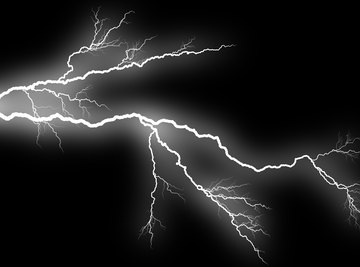

According to the National Severe Storms Laboratory, thunderstorms can cause damage due to high winds, flash flooding from rain and from lightning strikes. Strong thunderstorms can also spawn tornadoes, which can cause massive destruction to personal and business property. It is important to keep a sharp eye on the weather as it turns bad and take appropriate safety precautions, as severe storms can indirectly and directly lead to injuries or death.
Lightning Damage
According to the National Oceanic and Atmospheric Administration, when lighting strikes a home or building, electricity can pass through the wiring of the home. This can cause severe damage to any electrical appliances that are plugged into an outlet. Items such as phones, computers, small kitchen appliances and sound systems can be ruined when this occurs. Lightning can also spark fires, which can turn into grass fires and cause damage to a home or other property.
Tornado Damage
Tornadoes are one of the most destructive forces that can be produced in a thunderstorm. Most tornadoes have winds that reach speeds of 110 miles per hour, while stronger ones can exceed 200 miles per hour. When a tornado strikes, its strong winds and the debris that it carries can cause major structural damage to buildings. If it is strong enough, a tornado can even make a car, truck or other large vehicle airborne.
Flood Damage
When a thunderstorm rolls through, it can bring torrential downpours of rain with it. This rainfall can occur within a very short period of time, causing flash floods. According to NOAA, flash floods kill 146 people annually. A flash flood can cause damage to a structure, tear trees out of the ground and damage bridges. Flood water that is 2 inches deep can sweep away a car or a large truck.
Hail Damage
Hail damage can escalate to $1 billion annually, according to NOAA. Thunderstorms can produce hail of various sizes that can be devastating to personal property. For example, smaller hail can destroy a farmer's crop in a very short span of time, tearing the plants to pieces. Larger hail can dent the body of a car, break windows and cause extensive roof damage. A strong enough hailstorm can even kill livestock left in the open.
References
Resources
About the Author
Erin Steeley is a full-time writer and freelancer who uses her background in education, sign language and art to create quality articles. She published her first book, "The Soldier and the Storyteller," in 2006. Steeley has a Bachelor of Arts degree in general studies from Pittsburgh State University.