How to Create Shade with Evergreen Shrubs

Evergreen shrubs and trees provide dense year-round shading and screening for your house and yard. Since landscaping with evergreens is a moderate investment, good planning and consistent care are needed to yield good results. Consider color, density and texture as well as height when landscaping with evergreens. Like many gardening projects, this one requires some three-dimensional thinking and puts planning ahead of gardening. Does this Spark an idea?

Things You'll Need

  • Measuring tape, paper, pencil
  • Gardening catalogs or magazines
  • Evergreen shrubs
  • Spade
  • Peat moss or other soil enhancer
  • A strong back, helpful neighbor, or gardener--planting evergreen shrubs is fairly heavy work
  • Stakes and twine, if recommended
  • Reliable source of water
Show More

Instructions

  1. How to Create Shade with Evergreen Shrubs

    • 1

      Spend time looking through gardening catalogs and magazines until you find the approximate effect you wish to create. Consider shape, color (green comes in many shades), planting density, texture (you're going to be looking at this every day), and eventual height. To figure out how best to locate shrubs for shade, you need to know how tall they will grow. Remember that evergreen shade tends to be dense--all those branches--and year-round because needles stay. If your yard craves winter sunlight, consider deciduous shrubs instead. Remember also that shrubs tend to have branches from the top to the bottom, unlike trees. Look at the views that will be screened as well as the shade you will gain. Plan your landscaping both from outside the house and inside it.

    • 2

      Ask a reliable garden center or landscaper what would be most suitable for your climate and shade concerns. Find out when shrubs should be planted (usually fall or spring, never during a heat wave or after a hard-frost date). There is a current "instant hedge" craze that you should avoid if possible: landscapers quickly install full- or nearly-full-sized shrubs. While it may seem delightful to go from ugly view to instant 6-foot screen, your large plants experience considerable shock in transplant and, unless eased carefully into their new places and cared for consistently, as many as half the members of your new "green screen" may die within a couple of seasons. Shrubs that have attained only half their mature growth are a better bet.

    • 3

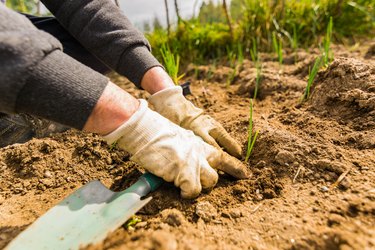
      If you are planting your shrubs or watching it done, there are several things you should make sure are done. (A) Holes for new shrubs should be twice the size of their root-balls; (B) To promote good root-development, soil replaced around shrubs should be lightened with peat-moss or other soil-enhancers; (C) Root-ball coverings, whether burlap or plastic mesh, should be removed or slashed in many places to promote root-growth; (D) All soil should be moist for planting, and the whole planting area needs to be watered once planting is finished. Before you water, tamp down the soil around shrubs with your feet--especially if you did not do the planting. Pockets of air left by hasty planting will produce dry and dying roots.

    • 4

      Find out the watering schedule you need to maintain until shrubs are settled, and stick to it. With good-sized woody plants, damage caused by insufficient watering doesn't appear until it's too late to repair. Just because shrubs look O.K., don't assume they're doing O.K. Keep watering.

    • 5

      If staking is recommended, keep staking in place as long as you are advised to. Large plants need wind-protection as well as watering. Good planning and good care will yield good growth; enjoy your new shade-spot.

Tips & Warnings

  • While you are planning, look at as many evergreens as you can. "Green" can run from golden shades all the way to near-black. Ask about shrubs that have seeds or berries to attract birds. Your green screen can look shiny, frothy, fluttery or still. You may even revise your plans to include several different shapes, shades and textures of green.

  • Beware of anyone who offers to put in your plantings "whenever you want"--much as you'd like your yard replanted in time for your Labor Day cookout, there are few evergreens that do well--or even survive--hot weather planting. Beware also of anyone who "guarantees" your plants--that is unrealistic and just one more way to boost charges. Some landscapers will offer replacements but make sure you understand the terms under which that policy is valid.

Related Searches:

Comments

You May Also Like

  • Evergreen Shrubs for Shade

    Evergreen Shrubs for Shade. Shrubs are technically trees, having woody stems. They differ in being smaller than trees and have multiple stems....

  • Shade-Loving Evergreen Shrubs

    Shade-Loving Evergreen Shrubs. With foliage that lasts through the dark days of winter, evergreen shrubs are year-long garden performers. The presence of...

  • How to Create Outdoor Shade

    Taking advantage of outdoor living space expands the usable area of your home and is a great way to enjoy warm weather...

  • Where Is the Best Place to Plant Trees to Get the Most Shade in the Summer?

    The cooling shade cast from a tree in the landscape is most welcoming during the hot summer months. Both deciduous and evergreen...

  • Good Shrubs for Shade

    Good Shrubs for Shade. Good shrubs for shade provide year-round interest. Choose shrubs that provide nectar for bees, butterflies or beneficial insects....

  • Trees That Create Shade Quickly

    Trees That Create Shade Quickly. Shade trees on the property create respite from the summer heat and help to reduce energy bills....

  • Shade Tolerant Evergreen Shrubs

    Shade Tolerant Evergreen Shrubs. Evergreen shrubs can be easy to care for and bring color to your yard, even in the winter...

  • How to Deer-Proof Shade Plants

    It is not uncommon for deer to come into a yard and make a meal out of the landscaping. Deer proofing shade...

Related Ads

Featured