
With their modest requirements and hardy nature, turtles make excellent pets. There are over 300 species of turtle worldwide and many are suitable to keep as pets, but keep in mind that some turtles are better left to the wild. Different species can be land living, semi-terrestrial or mainly aquatic. They also can live for a long time, sometimes up to 40 years, so having a pet turtle is a life-long commitment. When you are looking for a turtle, get one from a reputable reptile breeder or pet store. It is important to know your turtle species to provide it with the right food and environment.
What Traits to Look For
Video of the Day
There are many traits to look for on your pet turtle that will tell you exactly what type of turtle you have. By identifying the patterns and shapes of the shells, whether the feet are webbed or clawed, as well as any markings or color patters, you can better match your turtle to its correct species. Below are some of the characteristics you may find on your turtle.
Video of the Day
Shell Shape and Pattern
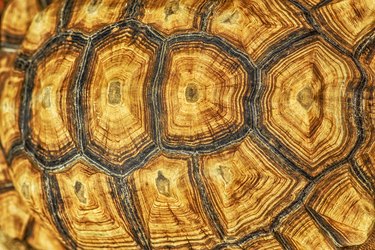
Turtles with high-domed shells are land living and are called box turtles or tortoises. Different species have different colors and shell patterns. Most are omnivorous and will hibernate during cold winters. Turtles with fairly flat top shells are generally aquatic and include the red-eared slider, which is a popular pet species. There are also soft-shell turtle species. The patterns and ridges on the shell help to identify the species.
Feet and Claws
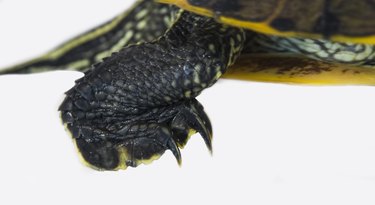
It is possible to tell which species of turtle you have based on its feet. If a turtle has webbed feet, it is a species that lives in water for most or all of its time. Turtles with claws are land dwelling, and use the claws to dig. Snapping turtles have claws on the front feet and webbed back feet and also are recognized by their hooked jaws. There are also marine turtles with front legs that look like flippers. These are not to be kept as pets.
Colors and Patterns
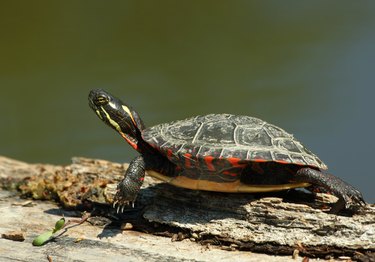
Skin colors and markings are used to identify different species. Painted turtles have a dark green to black shell while their skin is black to olive with red and yellow stripes on their legs, neck and tail. Map turtles have ridges along the middle of their shells and are also called sawback turtles. Red-eared sliders have a signature red or orange stripe from their eyes to the ear area, their top shell has a black and yellow line pattern, and their bottom shell is yellow with patterns.
Where to Get Help
Ask what species your turtle is when you buy it. If you are given one as a pet, you can post pictures on turtle forums to get help with species identification. The size and shape of the head, neck and tail are used to determine species. Some species retract their head into the shell by drawing it straight back while others kink their neck and tuck it in sideways. Check your local library for field guides and identification manuals, and visit online sources to work out what you have. If you are still not sure, visit a vet or reptile center for help.