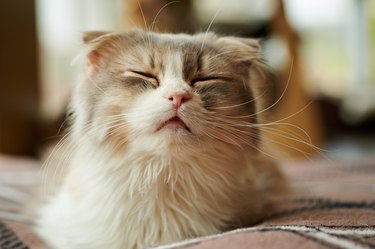
No one likes being sick with a respiratory condition. There's the sneezing, wheezing, and stuffy nose that makes it such an unpleasant experience. Unfortunately, we're not the only ones who can get sick; our feline friends can also suffer from these very same ailments. And it's just as yucky for them.
If your cat has been wheezing and sneezing up a storm or having trouble breathing due to stuffiness, it's time to visit a veterinarian to determine the cause. Your kitty may be suffering from a variety of conditions including a viral or bacterial infection that needs immediate treatment. With proper care, your feline friend should be feeling better in no time.
Video of the Day
Video of the Day
Dealing with allergies
One of the main causes of a cat wheezing and sneezing is allergies. There are many things in your cat's environment that could cause an allergic reaction, including cigarette smoke, pollen, dust mites, household cleaners, some types of litter, and perfumes, according to Vetinfo.
Visit the vet to rule out a more serious health issue before assuming that your cat is dealing with allergies. They may recommend an antihistamine like Benadryl or an anti-inflammatory medication to help reduce the symptoms of feline allergies.
After determining that allergies are at play, try to clean and vacuum your home as much as possible to keep dust mites and pollen at bay.
- Air purifiers also help keep the air around your kitty allergy-free.
- Don't smoke anywhere near your cat.
- Refrain from using air fresheners around your feline.
- Choose unscented, natural cleaners, and try a few different types of litter to see if that reduces your cat's symptoms.
Upper respiratory problems in cats
Respiratory problems in cats are a common cause of a cat wheezing and sneezing. A cat dealing with a bacterial, viral, or fungal upper respiratory infection will likely be experiencing stuffiness, nasal discharge, and teary eyes. Most upper respiratory infections are caused by feline calicivirus or feline herpesvirus, although some are caused by bacteria such as bordetella and chlamydophila, according to VCA Hospitals.
It's imperative that you get your cat examined by your veterinarian to deal with a feline URI, especially when it comes to kittens. Very young kittens and elderly felines are highly susceptible to these types of contagious infections, which can make them extremely sick. A cat with a stuffy nose will also have trouble smelling his food, making him less likely to eat, which can lead to a plethora of other health problems.
Your vet will determine the cause of your cat's URI and prescribe a medication, such as an antibiotic, to treat it. Even for cats with a viral infection, your vet may prescribe an antibiotic to treat any secondary bacterial infections that develop. And to prevent future outbreaks, have your cat vaccinated against feline herpesvirus and calicivirus to minimize illness and symptoms.
Pneumonia in cats
If your cat keeps sneezing, she could be dealing with a very serious type of respiratory condition like pneumonia. Pneumonia can be the main cause of respiratory problems in cats or a secondary condition that develops after a URI. It occurs when something causes inflammation of the respiratory tract and lung tissues, leading to trouble breathing and a lack of oxygen in the blood, according to the Merck Manual Veterinary Manual.
Like a URI, various types of bacteria, fungi, and viruses can cause pneumonia. Your cat can also develop pneumonia if she inhales a foreign body like water or swallows incorrectly and ends up with something in her lungs. In addition, parasites such as flukes or lungworms can cause pneumonia. Symptoms of pneumonia include labored breathing, coughing, lethargy, and lack of appetite.
Treatment for your cat's pneumonia will depend on the cause. For example, if your vet diagnoses your cat with a bacterial infection, he will prescribe antibiotics, or if a fungus is to blame, he will give you an antifungal medication. He may also want to give your cat oxygen, and if she is having a lot of trouble breathing, he may keep her until she is stable.
Feline asthma treatment
If your cat is wheezing and sneezing chronically, he could be dealing with feline asthma. Cats with asthma experience an extreme allergic reaction to something in their environment that typically gets worse during each subsequent exposure. In serious cases, this reaction can cause life-threatening symptoms like trouble breathing.
Your veterinarian will ask you a series of questions about your cat's symptoms to determine if asthma is at play. Cats with asthma typically experience sneezing, wheezing, vomiting, coughing, and rapid breathing, says the Cornell University College of Veterinary Medicine. She will also take X-rays of your cat to look for signs of asthma in your cat's lungs or possibly perform a bronchoscopy. A bronchoscopy is performed under anesthesia and involves placing a camera down your cat's throat to closely examine his lungs.
To treat asthma, your vet will likely prescribe a corticosteroid and bronchodilator to treat the inflammation in your cat's lungs. Air purifiers in your home may also help to alleviate the triggers of your feline friend's attacks.
Heartworms and respiratory problems in cats
Although heartworms are generally a serious problem in dogs, they can sometimes affect cats, too. If your kitty has heartworms, they could cause a condition known as heartworm-associated respiratory disease, according to the American Heartworm Society. These parasitic worms can cause serious damage to your cat's heart, lungs, and arteries.
Cats are not the natural hosts for heartworms, and they don't infect cats as seriously as in dogs. But unfortunately, even a few worms can still negatively affect a cat's health and can be fatal in some cases. Your vet will perform blood tests, X-rays, and an ultrasound to properly diagnose heartworms in your cat.
When it comes to treatment, the medication used to get rid of heartworms in dogs isn't safe for cats. Supportive care is necessary to get your cat through a heartworm infestation, including intravenous fluids, prednisolone, and antibiotics. Heartworm preventatives can also help prevent an infection with these dangerous pests.
Hairballs that cause wheezing
When your cat grooms herself, she ends up swallowing some of her hair, which can sometimes form clumps in her digestive system called hairballs. Hairballs in cats are a common occurrence that usually pass through the intestines without issue, but sometimes they can become serious and can even block her airways.
If you notice that your cat is wheezing and appears to be retching and coughing while hunched over, she may be dealing with a hairball, explains Vetinfo. There are hairball remedies that come in gel form you can administer to your cat if she's dealing with a hairball to help it pass more easily through her digestive system. You can also give her a bit of canned pumpkin to get things moving. This fiber-rich treat also helps relieve constipation, which can contribute to hairball formation.
To prevent hairballs in the first place, regularly brush your cat. Feed her a hairball-preventative diet if she frequently deals with hairballs in her system. Add foods to her diet that contain extra fiber to keep her digestive system moving along smoothly. You can also stick to a canned-food diet that contains more moisture than dry food to help pass any hair in her system.
Heart and lung conditions in cats
If your cat keeps sneezing and wheezing, it's possible that he's dealing with a heart and lung condition called endomyocarditis. This condition is sometimes brought on by a stressful event like surgery and causes the inner lining of the heart to become inflamed. Endomyocarditis can also cause a form of pneumonia called interstitial pneumonia.
Endomyocarditis typically affects younger male cats between 1 and 4 years of age, although it can affect both younger and older felines, according to PetMD. It can cause shortness of breath, wheezing or crackling sounds from the lungs, and an elevated heart rate. Prognosis for this condition isn't good, although supportive care can help relieve your cat's symptoms.
Dental problems and sneezing cats
A possibly unexpected cause of sneezing in cats are dental issues. If your cat develops a painful abscess or gum disease, it could lead to frequent sneezing. That's because the infection in the mouth can spread to the cat's sinuses, says Vetinfo.
Signs of dental issues in cats include bleeding gums, stinkier breath than usual, and a refusal to eat food, especially crunchy nuggets. Dental issues cause a long list of potential health conditions and can lead to infections that spread throughout the body to your cat's major organs. This is why it's important to brush your cat's teeth regularly.
Your veterinarian will let you know if your feline friend is suffering from dental problems and can professionally clean your cat's teeth. This is a procedure that is performed under anesthesia to allow the doctor to remove all of the plaque and tartar from the teeth, including areas below the gum line. He will also remove any infected teeth and prescribe medication to treat infections within the mouth.
Nasal tumors and respiratory problems in cats
Sometimes nasal tumors can cause problems for cats resulting in frequent sneezing and trouble breathing. These tumors may or may not be cancerous. If your veterinarian suspects a nasal tumor, she will physically examine your cat's nasal passages for signs of them or possibly order X-rays of the area and a magnetic resonance imaging scan, according to PetMD.
Nasal tumors will most likely require surgical removal by your veterinarian or a biopsy to determine if they are cancerous. After she determines whether or not the tumor is malignant, surgical removal and therapies like chemotherapy or radiation may be needed to treat cancer, depending on how far it has spread.
Wheezing cat remedies and supportive care
If you find your cat wheezing and sneezing, take her to the veterinarian for a checkup. Once diagnosed with the cause of her condition, there are a few things you can do to make your cat comfortable while she recovers.
Try placing a humidifier near your cat's favorite spot to hang out, recommends PetMD. The warm air will help lubricate her nasal passages and loosen any congestion, making breathing easier. If your feline friend won't sit near the humidifier or you don't have one handy, try putting her in the bathroom when you take a hot shower. The steam will alleviate stuffiness making it easier for her to breathe.
Regularly wipe down your kitty's eyes and nose with a washcloth lightly dampened with warm water to remove any crusty discharge that could be affecting her breathing and eyesight. It will immediately make her feel better, and the warm water will soothe the tissues around her nose that may be irritated.
Keep your cat well-fed and well-hydrated
Because a cat's sense of smell can be affected by a stuffy nose, you may need to make a few adjustments to your cat's diet as he recovers.
- For a cat who usually eats dry kibble, try giving him canned food instead. It smells a bit more pungent and appetizing.
- You may also have to heat the food for a few seconds in the microwave to enhance the aroma for your smell-deprived feline.
- Another option is to add something yummy on top of the food like tuna juice or his favorite treats.
Ensure that your cat is drinking plenty of water. Snotty felines can quickly become dehydrated, so it's a good idea to keep a few bowls of fresh water around for your feline. Or consider switching to an automatic pet fountain that constantly circulates your cat's water and keeps it fresh.
Always check with your veterinarian before changing your pet’s diet, medication, or physical activity routines. This information is not a substitute for a vet’s opinion.
- Vetinfo: Cat Sneezing and Wheezing
- VCA Hospitals: Feline Upper Respiratory Infection
- Cornell University College of Veterinary Medicine: Feline Asthma: What You Need To Know
- American Heartworm Society: Heartworm in Cats
- Vetinfo: Treatments for Cat Hairball Blockage
- PetMD: Heart and Lung Diseases in Cats
- Merck Manual Veterinary Manual: Pneumonia in Cats
- PetMD: Home Remedies for Cats With Colds
- Vetinfo: Why Does Your Cat Sneeze So Much?
- PetMD: Nose and Sinus cancer (Squamous Cell Carcinoma) in Cats