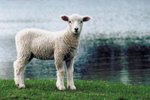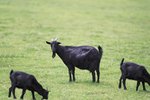

Goats make wonderful pets, but the full-sized breeds belong more on a farm than a backyard or place with limited space. Miniature goat breeds fit this niche nicely, taking up less room than the larger breeds. Most miniature goats are about the size of a medium to large dog. The best miniature goat is the one that matches your goals in terms of milk production, personality or appearance.
Nigerian Dwarf Goats
If you're looking for a small dairy breed, Nigerian dwarf goats may fit the bill. These goats aren't actually dwarfs; they are proportional to larger, standard goats. These small goats originated in Africa as dairy goats. Their rich, high butterfat milk at 6 to 10 percent makes them popular among goat milk drinkers, and their size makes them easy to keep in smaller spaces. Nigerians top out at 23 to 23.5 inches for bucks -- males -- and 21 to 22.5 inches for does -- females. These little goats' gentle personalities make them ideal for pets, states the Nigerian Dwarf Goat Association.
Pygmy Goats
Pygmy goats come originally from Cameroon. Standing just shy of 21 inches, they are gregarious and docile, making for a fine pet. If you're looking for one to milk be sure the goats you buy are from good milkers. They don't need much space and they forage well.
The Kinder
Kinders bring the best of both worlds, as they are a cross between Nigerian dwarf and Pygmy goats. They weigh between 100 and 125 pounds, and provide both meat and milk. Easy to handle, they're ideal for the small homestead. Like the Nigerian dwarf, their milk ranks high in butterfat and makes excellent cheese.
Mini Dairy Goats
Breeders cross Nigerian dwarfs with standard-sized breeds to obtain a miniature version of those breeds. These goats measure between the Nigerian dwarf and the standard-sized breed and produce about three-quarters the amount of milk that the standard-sized breed will. They look like the standard breed and not like a Nigerian.
Considerations
Regardless what miniature goat you choose, you should own more than one. Goats are herd animals and need companionship with their own kind. Wethers -- castrated males -- make sweet pets and don't have the "buck smell," a strong odor associated with adult males that some find unpleasant.
References
- Nigerian Dwarf Goat Association: About Nigerian Dwarf Goats
- Miniature Dairy Goat Association: FAQ's and Other Information About Mini-Dairy Goats
- Nigerian Dwarf Dairy Goats: Why Goats?
- National Pygmy Goat Association: The Pygmy
- National Pygmy Goat Association: Breed Standard
- Kinder Goat Breeders Association: Breed Information
Photo Credits
-
Jupiterimages/Photos.com/Getty Images