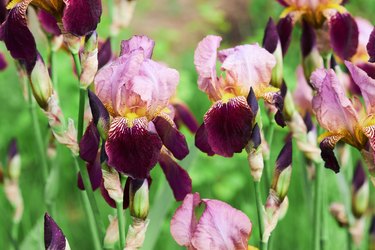
German (bearded) irises (Iris x germanica, USDA zones 3-10) are hardy, prolific perennials that don't require much care and maintenance. Once they're planted in a sunny, well-drained spot, leave them alone and let them work their magic. Removing blooms in late spring and tending to the foliage at the end of the growing season will ensure that irises will happily present you with colorful blooms for many more years.
The best thing about planting irises is that only a few rhizomes can spawn many offspring to beautify your property well into the future.
Video of the Day
Video of the Day
Deadheading Irises
Unfortunately, the iris' striking blooms only last a couple of weeks before they start to fade and dry out. Deadheading or removing the blooms from the irises will prevent the iris from going to seed.
Cut off the iris blooms with clean scissors when they fade. Cut the bloom and the stem clear to the ground, but don't remove any of the foliage while it's still green. The iris rhizomes need the energy from the foliage to grow throughout the winter and bloom the following spring. Avoid fertilizing irises as it's not required for their growth and can promote root rot.
Cutting Back Iris Leaves
Remove the foliage when it dies down and turns yellow. Keep the planting area tidy, and remove any weeds and debris. Iris prefer dry conditions, so remember to water only during very hot, dry periods. Don't add mulch to the iris bed as that will keep moisture at the roots and cause rot. Avoid putting iris clippings in the composter as they can promote infection.
Most iris can live throughout the winter in their hardiness zone range, even in cold temperatures and don't require additional steps for them to stay warm.
Dividing Irises
Divide the iris if they've been in place for more than four years, or if the plants are crowded. Do this just after they're done flowering.
Dig the entire iris clump out of the ground. As the iris rhizomes like to see sunlight, they should be just below the surface. It should be easy to gently pull apart rhizomes by hand. If they're stubborn, use a clean, dull knife to separate the plants. Cut off brown spots, and dispose of the old, dead sections in the middle of the clumps. Clip the foliage to about six inches.
Transplanting Irises
Transplant irises in late spring to early fall when the soil is still warm and there's no danger of frost. Don't bury the rhizome, but gently push it into the dirt so it still sees some sunlight. The top of the rhizome should be just above the soil. To avoid overcrowding, plant rhizomes about 12 inches apart.
- University of Illinois Extension: Caring for Your Iris
- University of Minnesota Extension: Irises
- Hyannis Country Garden: Caring for Irises After They Bloom
- Better Homes & Gardens: How to Grow, Maintain, and Divide Bearded Iris
- The Royal Horticultural Society: Doddington Hall's Top Iris Growing Tips
- Farmer's Almanac: Growing Irises