
How to Figure Helmet Sizes for Youth Softball
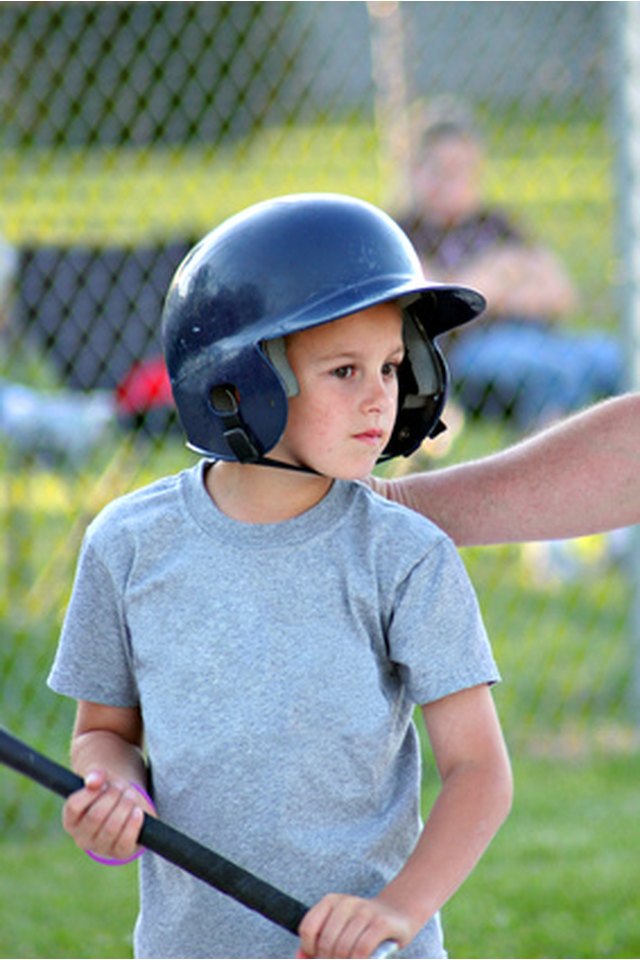
Age is not a reliable measurement of head size. The only way to determine proper helmet sizes is to measure the head. When batting, a batting helmet is worn to protect the head. A batting helmet should be properly sized to ensure optimal protection. Softball is a sport that is similar to baseball. The main differences are that the baseball is small and pitched overhand, while the softball is larger and pitched underhand.
Wrap a flexible measuring tape around the child's head. Start in the center of the forehead, 1 inch above the eyebrows. The measuring tape should be laying flat on the child's head, with no extra slack, and should not be pulled tightly.
Write down the measurement.
Select the size of the helmet that corresponds with the measurement taken.
- An extra small size should be selected for a head circumference of 20 3/4 inches to 21 1/4 inches;
- a small size should be selected for a circumference of 21 1/2 inches through 22 inches;
- select medium for head circumferences measuring 22 1/4 inches to 22 3/4 inches;
- a large helmet should be worn if the circumference measures 23 inches to 23 1/2 inches;
- an extra large helmet should be chosen if the head circumference falls between 23 3/4 inches and 24 1/4 inches.
While measuring is the only way to determine specific helmet sizes for each child, below are averages that may be useful if you need to bulk order helmets for an entire youth softball team or organization.
- 95 percent of children 8 years old or younger will fit in a 54 cm (21.2 inches) or smaller helmet.
- 50 percent of kids ages 9 through 13 years old will still fit a 54 cm helmet.
- 54 cm is the average head size of a 12-year-old child.
Tips
- While measuring is the only way to determine specific helmet sizes for each child, below are averages that may be useful if you need to bulk order helmets for an entire youth softball team or organization.
- 95 percent of children 8 years old or younger will fit in a 54 cm (21.2 inches) or smaller helmet. 50 percent of kids ages 9 through 13 years old will still fit a 54 cm helmet. 54 cm is the average head size of a 12-year-old child.
Writer Bio
Kallie Johnson began her writing career in 2009, contributing to various online publications. She holds a Bachelor of Arts in English from the University of Nevada, Las Vegas. She enjoys writing home and garden topics and considers herself an expert on do-it-yourself home improvement topics.