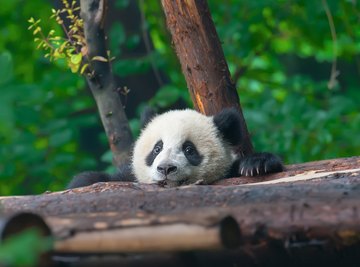

The giant panda is an interesting and beautiful creature. The panda has a striking coat and mild temperament that sometimes translates as lazy. Pandas are an endangered species due to poaching and loss of habitat. Many conservationist organizations are working hard to keep pandas from going extinct so that future generations can enjoy the majestic creatures.
Appearance and Size
The giant panda is from 3 to 4 feet tall when standing on all fours, and can grow to over 6 feet long. The pandas weigh between 150 and 250 pounds. Female pandas are slightly smaller, and rarely grow larger than 220 pounds. The fur on the panda is a striking color block of black and white. The head is mostly white, the arms and front half of the body are black, the hindquarters are white and the back legs are black.
Characteristics and Behaviors
The disposition of the panda is surprisingly mild for a bear. While the teeth are similar to that of carnivorous bears, the panda only eats plants, such as bamboo shoots. Pandas are loners, but sometimes they will communicate and interact with other adult pandas. Female pandas ovulate once a year in the spring for two or three days. This short ovulation time is one of the reasons why the species is endangered. Baby pandas stay with their mothers for one and a half to three years. Pandas do not hibernate and spend most of their time searching for food and resting. Pandas live about 30 years.
Panda Diet
Pandas eat a diet that consists of 99 percent bamboo in the wild. In a zoo, the zookeepers will often give the pandas dietary supplements, such as sugar cane, sweet potatoes and other items. Pandas eat around 40 pounds of food each day, which can take up to 16 hours to find. Pandas drink fresh water from streams and rivers to supplement the water that they get from bamboo shoots, which can contain up to 90 percent water.
Where to Find Pandas
About 1,600 pandas are living in the wild, according to Animal Info, and an additional 300 pandas are in zoos. Pandas live in Southwest China and in the temperate forests of China. The giant panda has a limited native region. Pandas live in high altitudes around 8,000 to 12,000 feet. The giant panda lives in forests with dense foliage and a large amount of natural bamboo plants. In zoos, the natural habitat of the panda is copied for the bears' comfort.
References
About the Author
Brenda Priddy has more than 10 years of crafting and design experience, as well as more than six years of professional writing experience. Her work appears in online publications such as Donna Rae at Home, Five Minutes for Going Green and Daily Mayo. Priddy also writes for Archstone Business Solutions and holds an Associate of Arts in English from McLennan Community College.