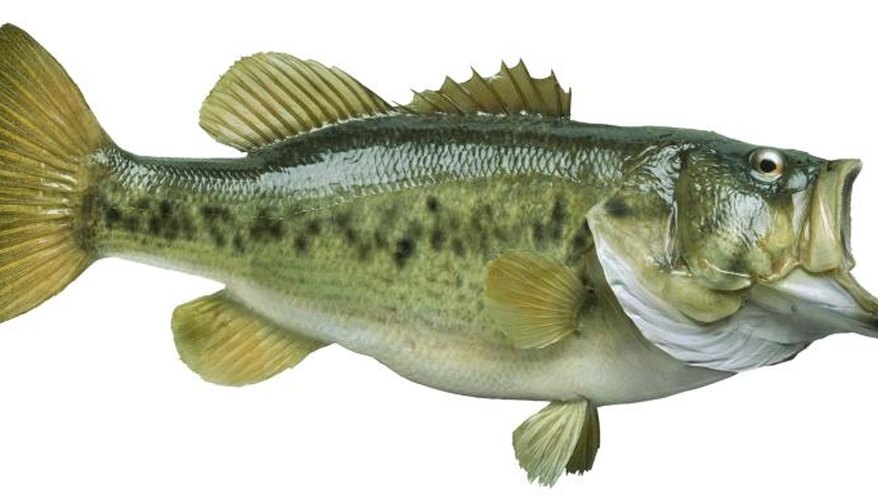


Cleaning a bass is simple and consistent with the process required for cleaning most fish. You must remove the entrails, clean and prepare the meat for cooking. You can cook the entire bass or remove the fillets to isolate the meat. Removing the fillets is the most efficient and clean option.
Items you will need
Fillet knife
Cleaning the Bass
Step 1
Make a shallow incision at the base of the tail fin, on the belly. Cut the entire belly open from the initial incision to the lower jaw.
Step 2
Reach inside the cavity and pull out the intestines and organs until the cavity is empty. Wash the inside of the cavity with water.
Step 3
Use your finger to scrape any remaining debris and wash a second time with water.
Step 4
Hold the blade of a knife against the skin of the fish. Scrape the blade from the tail to the head to remove the scales. Complete the process on both sides. Rinse with water and the fish is ready for cooking whole. Remove the head if you wish, although leaving the head on will make the fish easier to fillet.
Filleting the Bass
Step 1
Make an incision behind the gill plate, from the spine to the belly. Turn the knife flush against the spine, facing towards the tail. Maintain a slight downward angle into the belly. Push the knife along the spine until you reach the tail. Remove the fillet.
Step 2
Turn the fish on the opposite side and repeat to remove the second fillet. Discard the carcass.
Step 3
You can cook the fillet with the skin on or off. To remove the skin, insert the knife between the skin and the meat. Pull on the skin while sliding the knife down the fillet. Continue until the skin is free. Discard the skin.
Warnings
- Be cautious with the fillet knife. Always point the knife away from your fingers and body.
Tips
- Removing the guts and scales is not necessary when using the fillet method.
References
Tips
- Removing the guts and scales is not necessary when using the fillet method.
Warnings
- Be cautious with the fillet knife. Always point the knife away from your fingers and body.
Writer Bio
Zach Lazzari is a freelance outdoor writer specializing in hunting, fly fishing and the general outdoors. He guided fly fishing trips for 10 years in Colorado, Alaska, Montana and Patagonia-Chile. Zach lives in Montana and splits time between the river and keyboard.