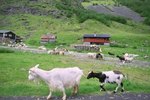
Goats are smart creatures, and Nubian goats are exceptionally bright caprines. Also known as Anglo Nubians, these docile, friendly animals make good pets, pack and dairy goats. Although they don't produce as much milk as other dairy breeds, what they do produce is higher in butterfat and more flavorful. Caring for Nubians isn't that different from caring for other goats, but their size and fecundity require some special considerations.
Goat Housing
Your Nubian doesn't require elaborate shelter, but she does need protection from the elements. If you don't have a barn, a three-sided run-in shed should suffice. The opening must face away from prevailing winds. Provide plenty of bedding, especially for pregnant does close to kidding. Clean the goat's enclosure and pen regularly.
Feeding Your Nubians
Along with pasture, Nubian goats do well with good alfalfa hay and dairy goat grain concentrates. If your local feed store doesn't stock dairy goat feed per se, choose a high protein goat chow. While it's important to properly feed any goat, it's especially true of a milk-producing doe. Check your fields or any browsing areas for plants that may taint the taste of the milk. Either remove such plants, or keep the goat away from them. Of course, Nubians always require access to fresh, clean water and a salt lick.
Do Fence Them In
Like any goat, Nubians require strong fencing to keep them where you want them. They possess that Houdini-like ability to escape common to their species. Because they are especially tall caprines, you'll need to install higher fencing than with other breeds. The average Nubian doe stands 32 inches tall at the shoulder and weighs at least 130 pounds, with bucks or wethers reaching 36 inches and weighing about 175 pounds, making them one of the largest goat breeds. Whether you choose chain-link, woven wire or electric fencing -- or a combination of electric and another type -- make sure the fence is a minimum of 4 feet high.
Dairy Goats
Besides their milk's high fat content, Nubian does have some other advantages as dairy animals. These fertile goats continue producing kids long after aging does of other breeds have difficulty conceiving, and they often produce multiple kids with pregnancy -- sometimes as many as four or five. The Nubian also has a longer breeding season than other types of does. Because goat kids are traditionally fed with milk replacer rather than nursing -- partly to keep the doe available for milking and partly to prevent caprine arthritis encephalitis, spread through lactation -- a Nubian might produce dairy milk for 300 days annually.
Veterinary and Hoof Care
Your veterinarian will put together a basic vaccination schedule for your Nubians, based on disease risks in your area. Make sure to vaccinate pregnant does for Clostridium perfringens about one month before their due dates. Vaccinate their kids about the age of 6 weeks, with a booster three or four weeks later. Your veterinarian also will recommend a deworming program suitable for your region. Expect to worm your Nubians every one or two months, depending on your climate. Goats living in warm, humid parts of the country usually require more frequent dewormings than those in northern climes. Trim your goat's hooves about every month, depending on growth rates and natural wear.
References
Photo Credits
-
suefeldberg/iStock/Getty Images
Writer Bio
Jane Meggitt has been a writer for more than 20 years. In addition to reporting for a major newspaper chain, she has been published in "Horse News," "Suburban Classic," "Hoof Beats," "Equine Journal" and other publications. She has a Bachelor of Arts in English from New York University and an Associate of Arts from the American Academy of Dramatics Arts, New York City.