This Season
 
Explore

How to Make Homemade Goat Cheese

Goat’s milk is naturally homogenized, meaning that the cream is already blended with the milk, which makes the cheese rich and satisfying. Simple homemade goat cheese can be fun and tasty to make. Just follow these steps.

Related Searches:
    Difficulty:
    Moderately Easy

    Instructions

    Things You'll Need

    • 1 gallon Fresh goat's milk
    • 1/4 cup vinegar or lemon juice
    • Cheesecloth
    • Candy thermometer
    • Large stainless stockpot
    • Long thin knife
    • Long stainless steel spoon
    • Fine mesh colander
      • 1

        Pour the milk into the stockpot. Over low heat, slowly bring the temperature of the milk up to 180 degrees. Raising the heat too quickly will cause the milk to stick to the bottom of the pan and will give the cheese a burnt taste.

      • 2

        Remove the pan from the heat when the desired temperature is reached. Quickly add the vinegar or lemon juice, stirring to distribute throughout the milk.

      • 3

        Let the mix sit for 30 minutes. After the time has passed, use a long, sharp knife to cut the curd that has formed. Point the knife straight downward at one edge of the pot and pull straight to the opposite side. Do this all around the pan until you have cubes formed in the curd. Let the curd set for 10 minutes more.

      • 4

        Line the colander with cheesecloth. Pour the curds and whey into the colander and let them drain for a few minutes. Pull up each corner of the cheesecloth and tie the curds into a ball. Hang the cloth over the sink faucet and allow it to drain for at least 4 hours or overnight. The cheese is now ready to eat as is or can be refrigerated for later.

    Tips & Warnings

    • If desired, the cheese can be put into a press for a firmer, sliceable cheese.

    • The use of vinegar will give the finished cheese a taste similar to Ricotta, while lemon juice will give it a slight lemony flavor.

    • Before refrigerating the cheese, herbs and spices can be blended into the curds for a unique cracker spread.

    Related Searches

    Comments

    You May Also Like

    Follow eHow Food

    Related Ads

    eHow's Food Blog Table Talk

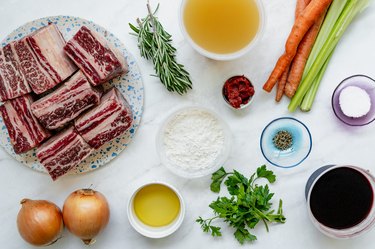
    Short Ribs Are Awesome – But That Doesn’t Mean You Can’t Ruin Them

    Now consider the short rib. You see it all the time, in stews and in braises, sometimes in sandwiches, sometimes smoked, but always essentially theï؟½