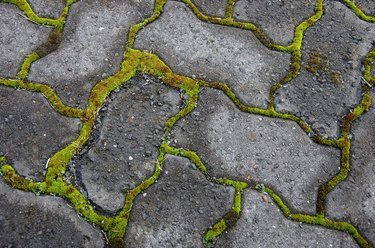
Moss, a velvety green plant organism, grows on exterior concrete surfaces that are not exposed to sunlight and remain in a persistently moist state. While moss is not harmful to concrete, its presence on concrete patios and walkways can make them more slippery, causing a safety hazard. These growths can be effectively removed using a chemical control method. Start with the least toxic, only applying another method if the first is not effective.
Things You'll Need
Kettle
Stiff broom or scrub brush
Protective gloves, goggles and mask for use with chemicals
Garden hose or power sprayer
Baking soda
Lime
Garden sprayer or watering can
Bleach
Video of the Day
How to Remove Moss From Concrete
Step 1: Pour Hot Water Over Moss
Carefully pour the boiling water over the area affected by moss. This is the most environmentally friendly application. Scrub with stiff brush or broom and wash away debris with hose.
Video of the Day
Step 2: Dash an Alkaline Powder on Moss
Sprinkle agricultural lime or baking soda on affected areas to kill moss. These chemically alkaline powders help neutralize the acidic conditions mosses thrive in. Let it set 24 hours, then carefully sweep up and dispose of powder
Step 3: Spray Moss with Bleach
Put on rubber gloves and old clothing. Apply regular household bleach to your moss with a sprayer. The recommended mixture is 1 part water to 1 part bleach concentrate. Spray to cover the area and leave it for 30 seconds, then brush and hose off. Again, damage to clothing, other plants and grass is possible, so follow directions on bottle carefully. The use of this method may keep moss from regrowing for up to one year. Brands of bleach specifically concentrated for killing mosses can be found in most garden centers.
Step 4: Spray Moss with Zinc Sulfate
Put on safety gear. Mix a solution of 3 pounds of zinc sulfate with 5 gallons of water and apply to mossy areas with a garden sprayer or watering can. The product is said to be effective for two to five years. It can damage surrounding plants, so these should be covered during the application process. It is also toxic to fish and should not be applied near water.
Step 5: Use Ammonium Sulfate
Don safety gear. Apply ammonium sulfate to the moss on your concrete. Ammonium sulfate is sold in garden supply stores under a variety of brand names such as Amcide, Amicide, Amidosulfate, Ammate, Ammate X-NI, Fyran 206k, Ikurin, Silvicide, and Sulfamate.). Follow manufacture's guidelines for application. It is generally applied using a sprayer or watering can with a sprinkling spout, drenching all areas of concrete where moss is a problem. Avoid desirable flora, including trees or shrubs. Choose a day or time when the air is still to circumvent damage to other plants. Be sure to read label carefully before use and follow all manufacturer's directions.
Step 6: Clean the Area
Use a power washer to clear the area both of moss debris and chemical residue after any of these treatments.
Tip
Trim tree branches and rake away leaves and other debris that contribute to the dark, damp conditions that lead to moss on your concrete structures.
Warning
Always read all manufacturer's directions and cautions before using any chemical compounds.